In all my projects, I aim to create interventions which speak to the existing context while creating something new, enhancing inhabitant and passerby experience and the world-building of place, not designs or concepts that are standardised.
Graduation Project: El Dragón De Barcelona
A Structure Which Responds To The Modern Dragon Of Barcelona And The Homeless Crisis
El Dragón De Barcelona explores the duality of the dragon within the city, a creature which is both a creator and destroyer. In present times, the dragon has evolved – with tourism becoming the modern dragon, offering both opportunities but also becoming the catalyst to societal problems. One of these keys problems includes the homelessness crisis, which in Sants Montjuïc has seen a 134% since 2023.
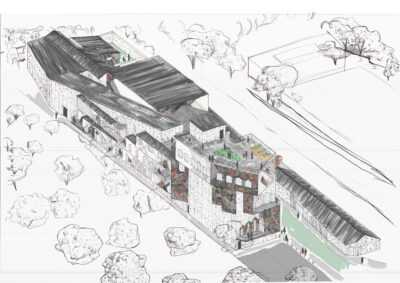
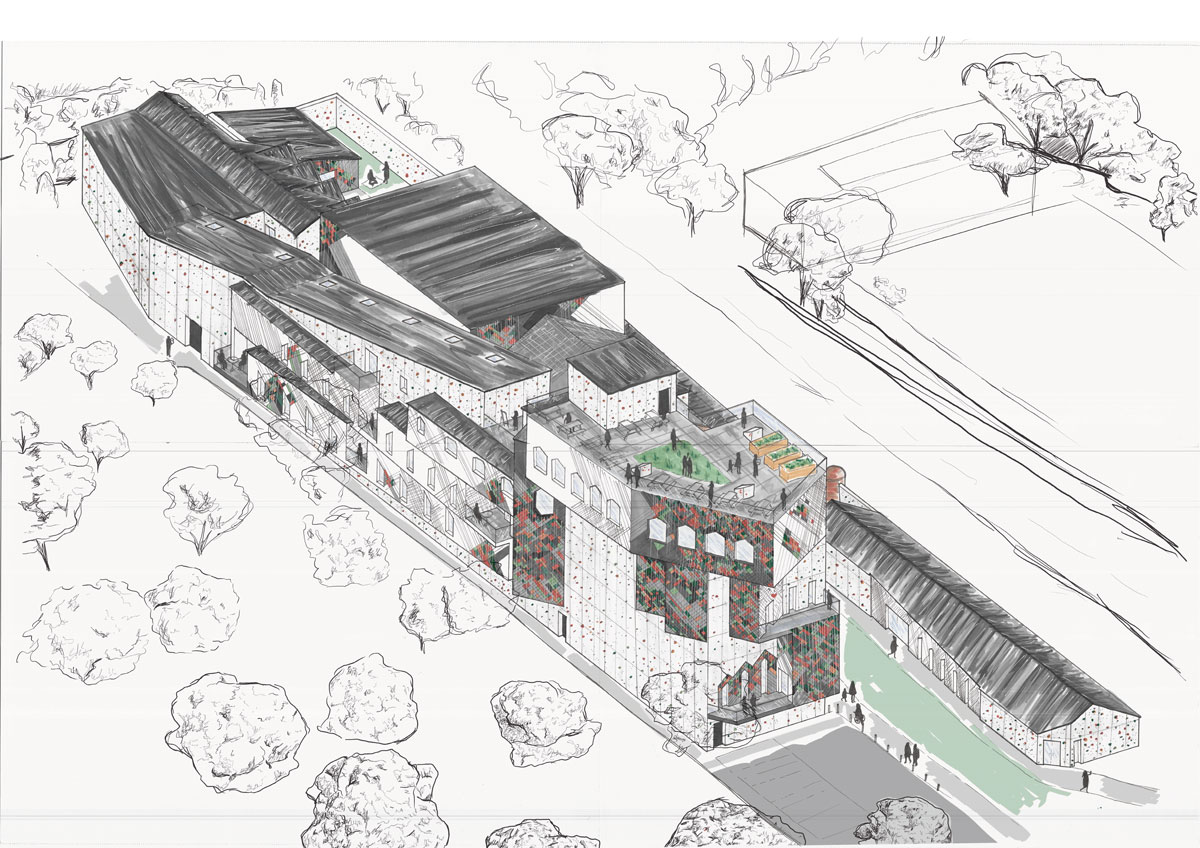
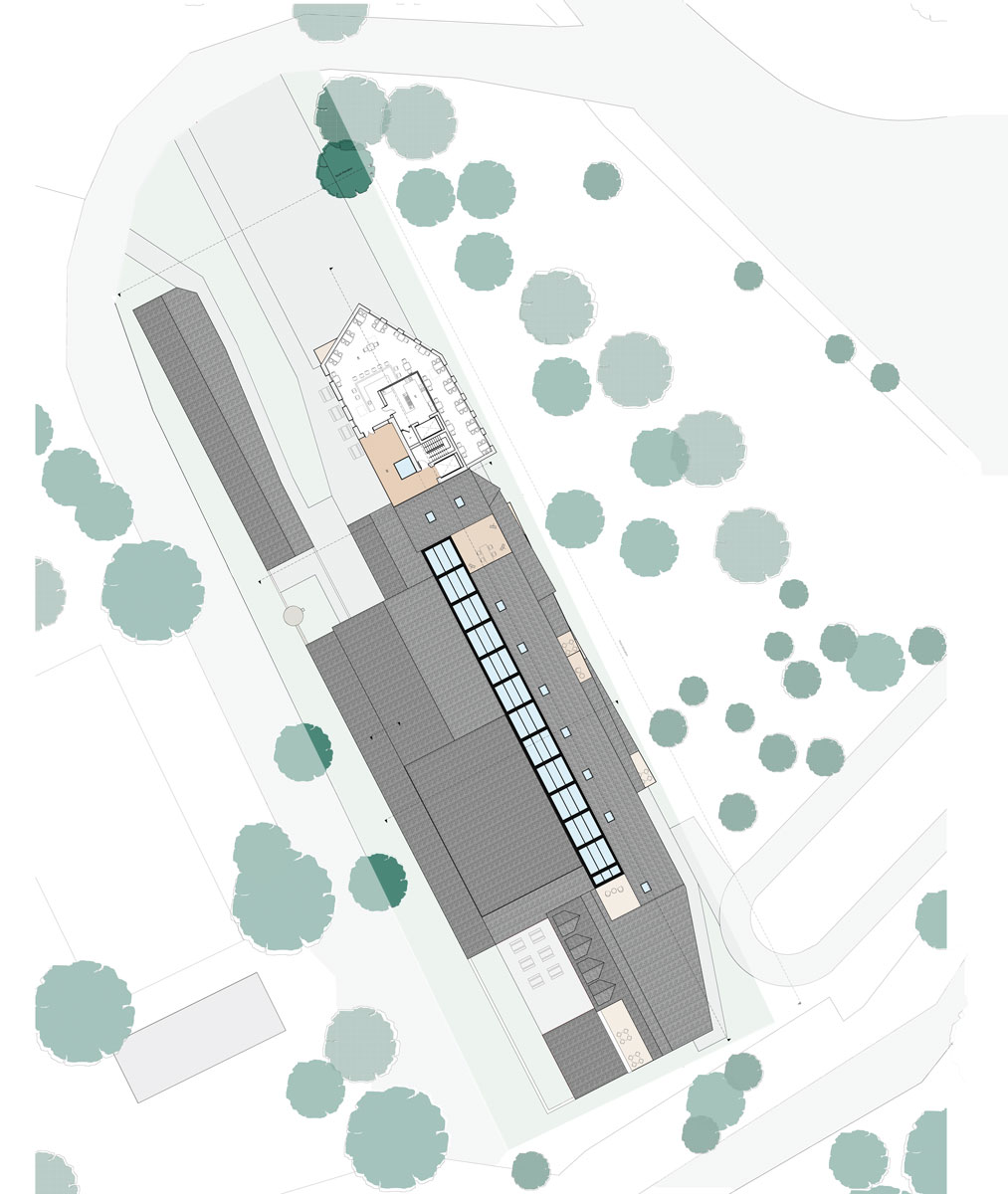
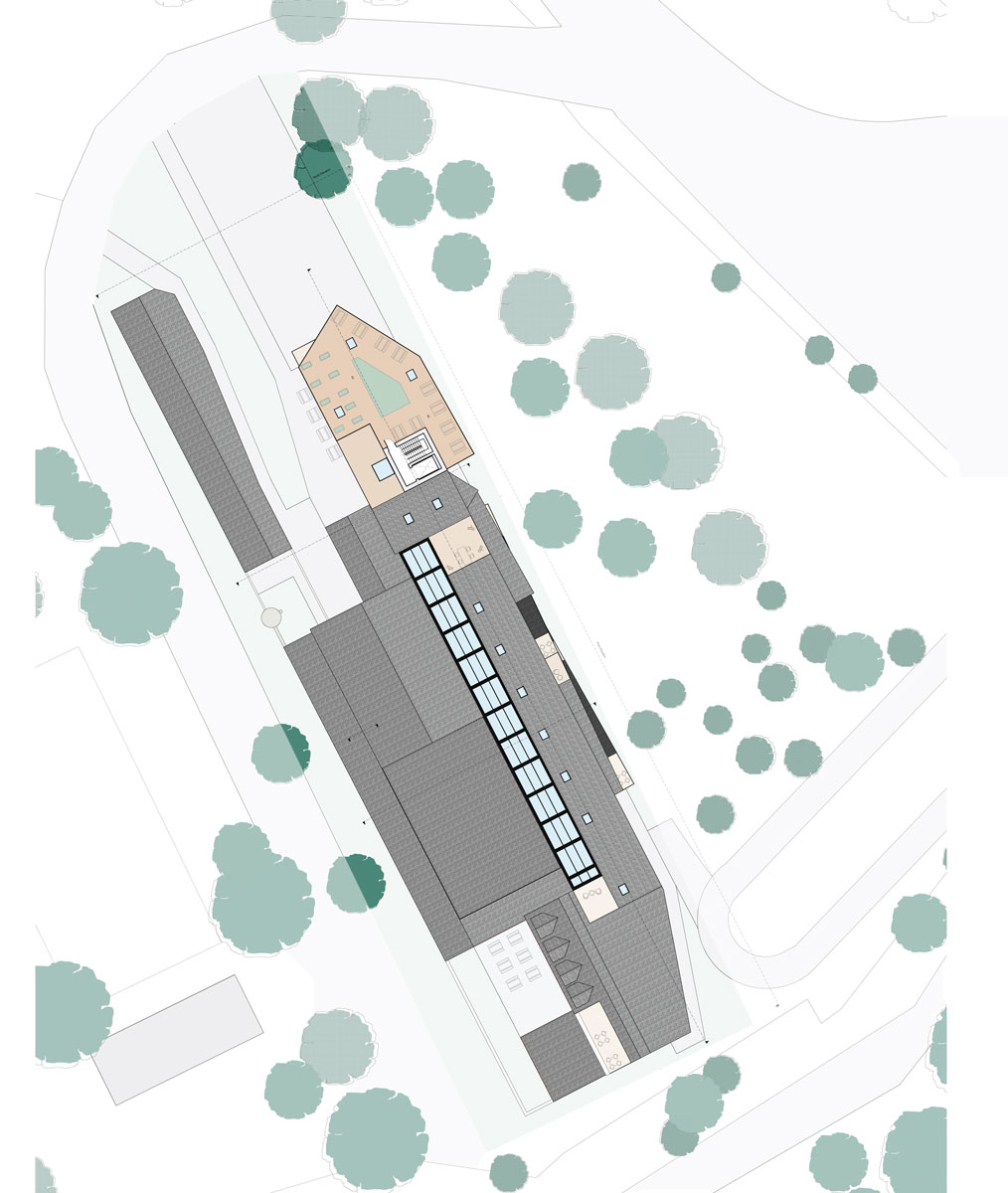
The intervention creates a creates a new landmark on the Montjuïc hill to fill the current void of support for people affected by the homelessness crisis caused by the modern dragon, as well as people who live with learning differences, by providing a support and performing arts centre.
El Dragón De Barcelona embraces the theme of duality in both it’s form and programme and acknowledges that the modern dragon isn’t going to leave, instead it embraces the modern dragon and utilises tourism as part of the solution it was the catalyst for and allows for transformation and new beginnings for individuals affected.
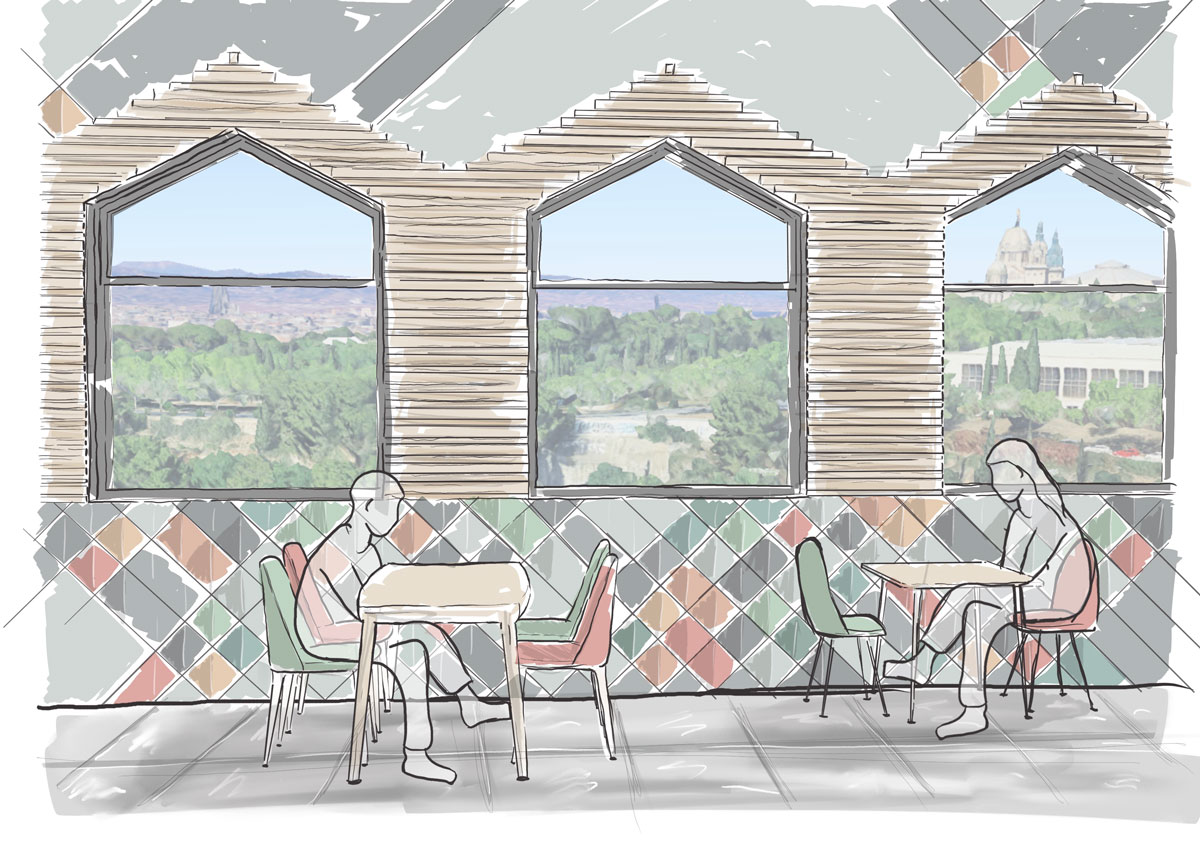
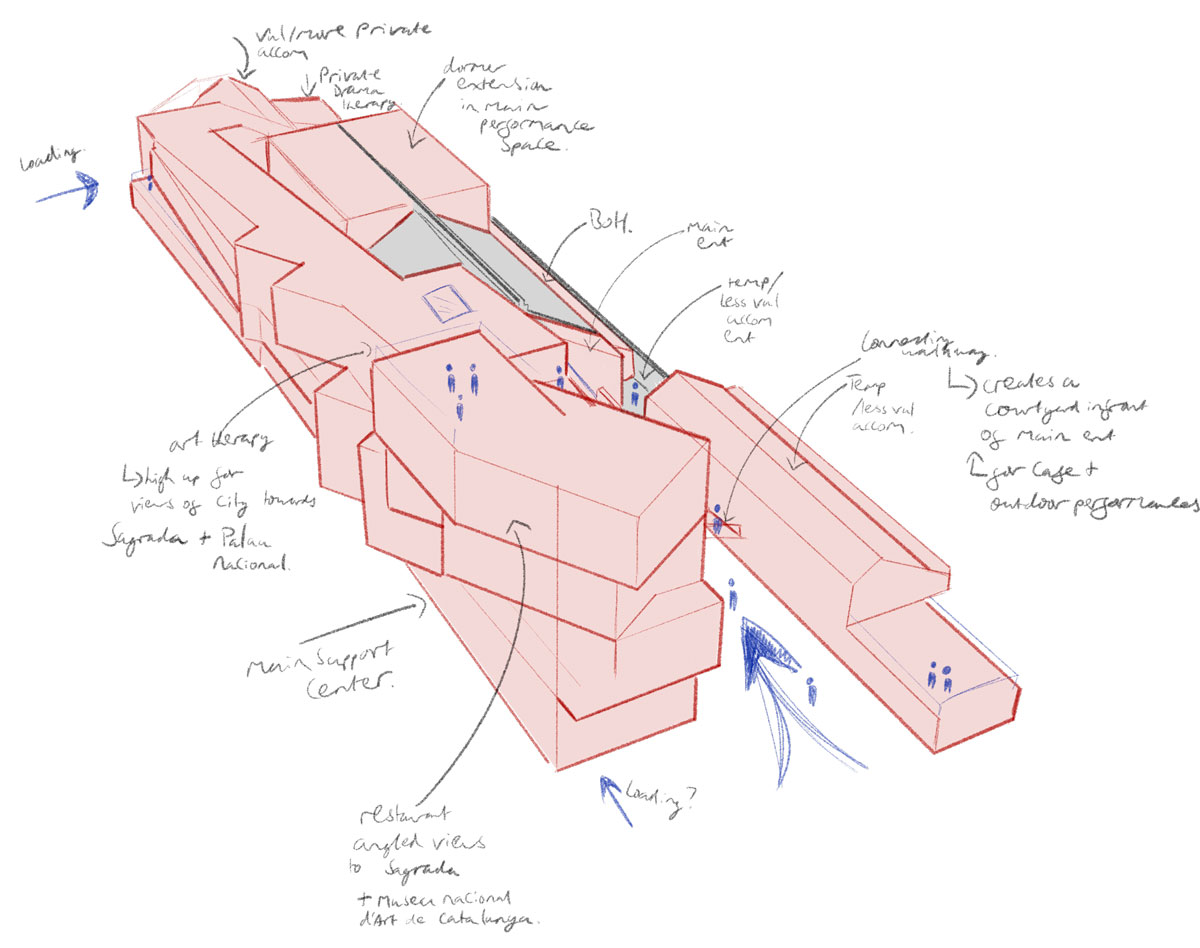
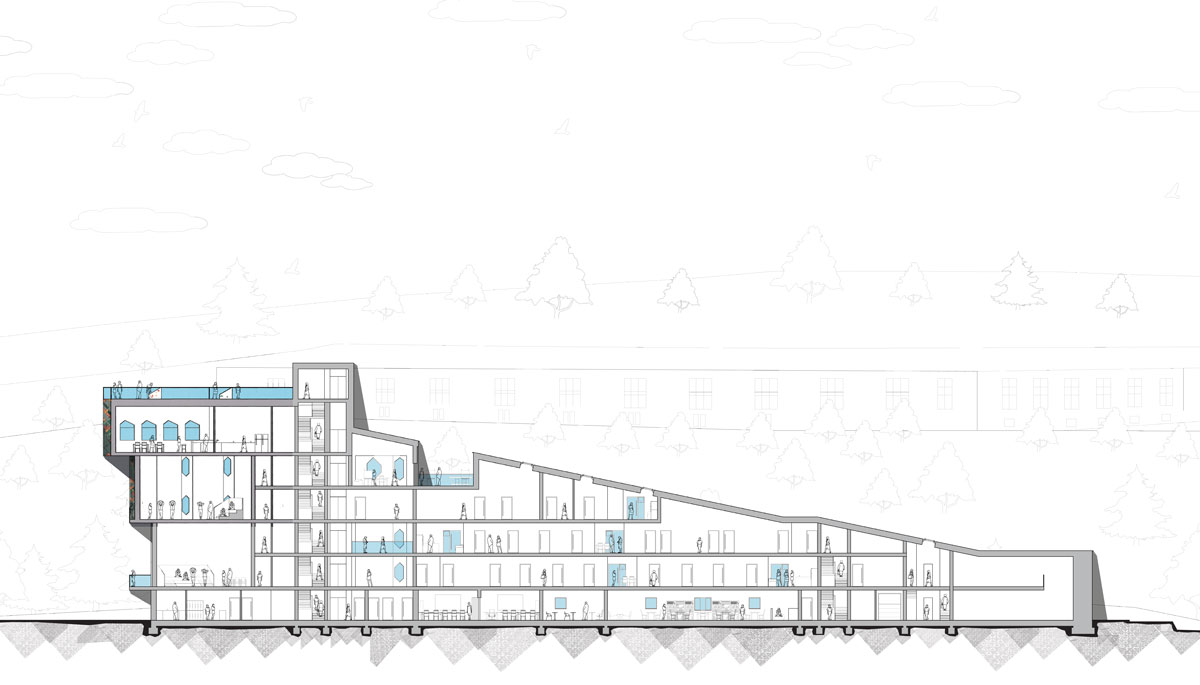
Interior Visual: Restaurant – The Life-Skills Cafe on the ground floor offers an informal dining experience during the day for visitors and acts as a dining hall for residents at the temporary accommodation at night. It allows residents to have routine and social interaction with members of society outside of the accommodation and also allows them to learn basic hospitality skills which they can use in the future to support themselves in their future occupations, as well as additional cooking, self-care and social skills.
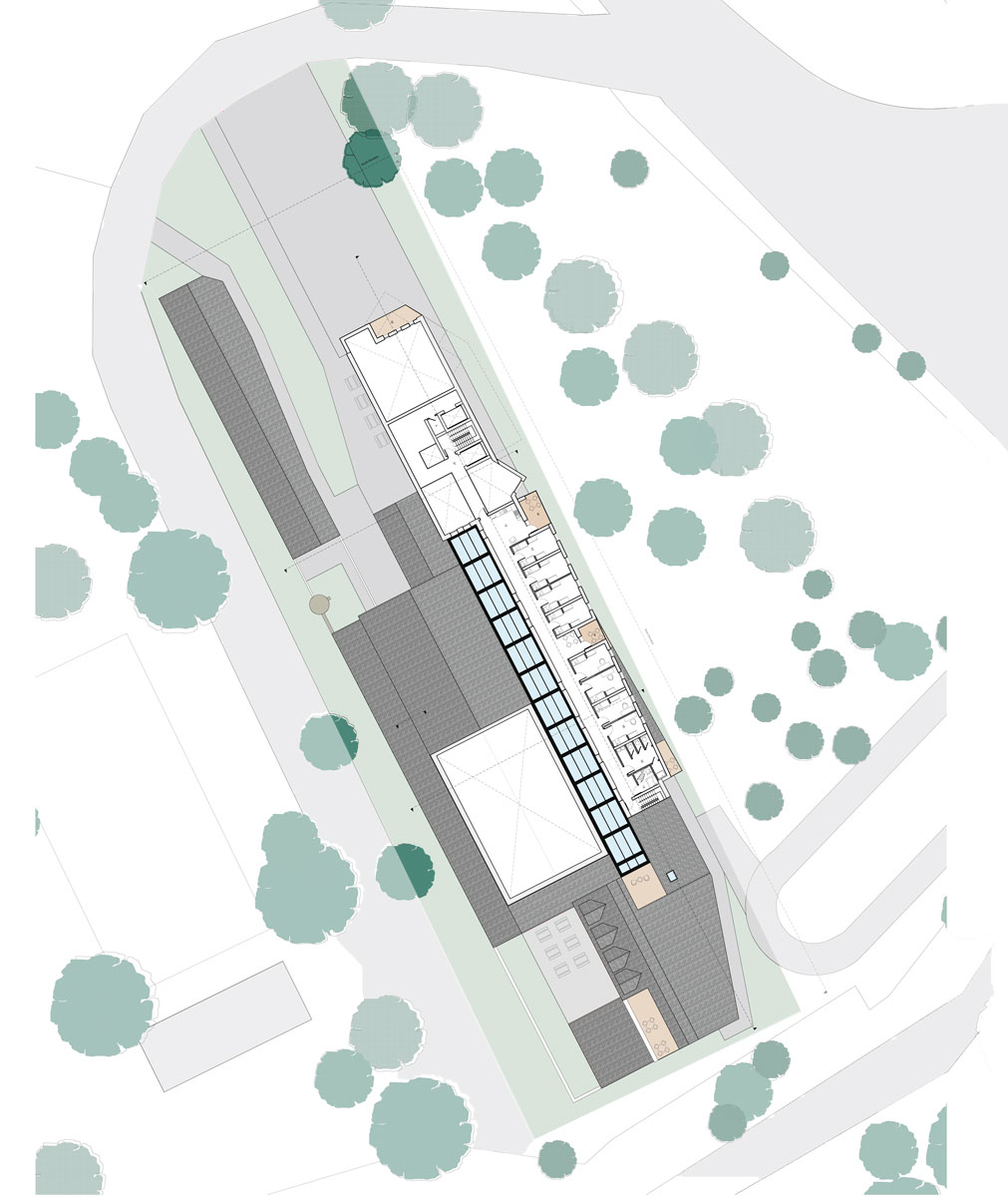
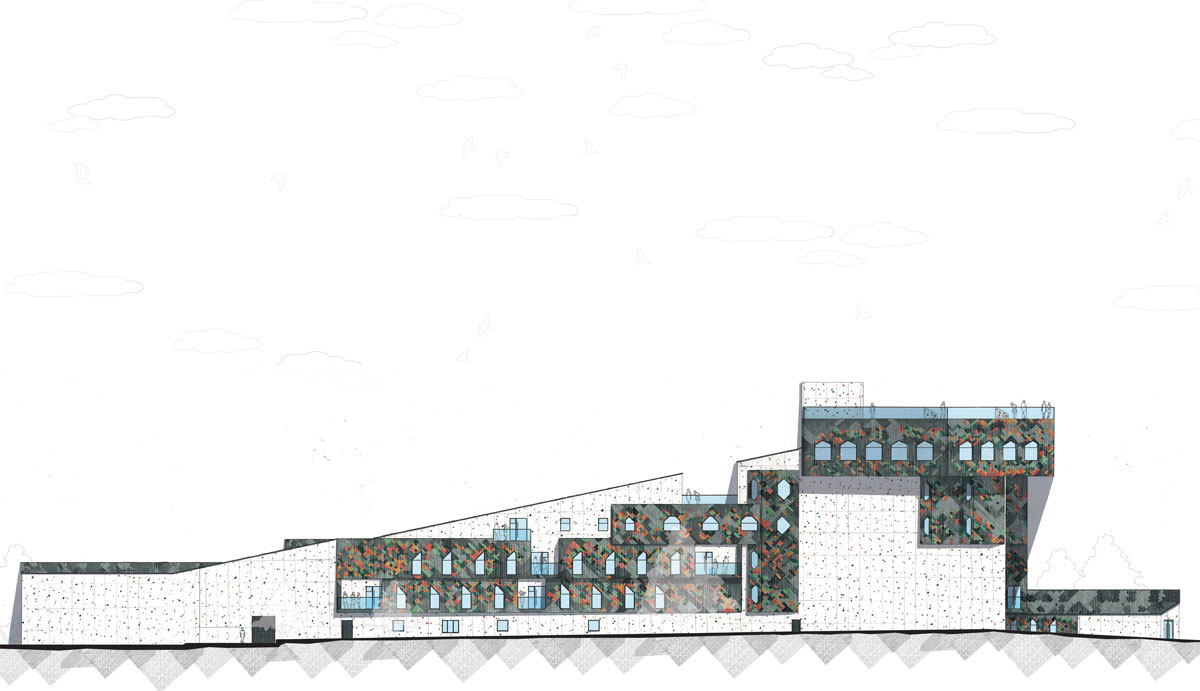
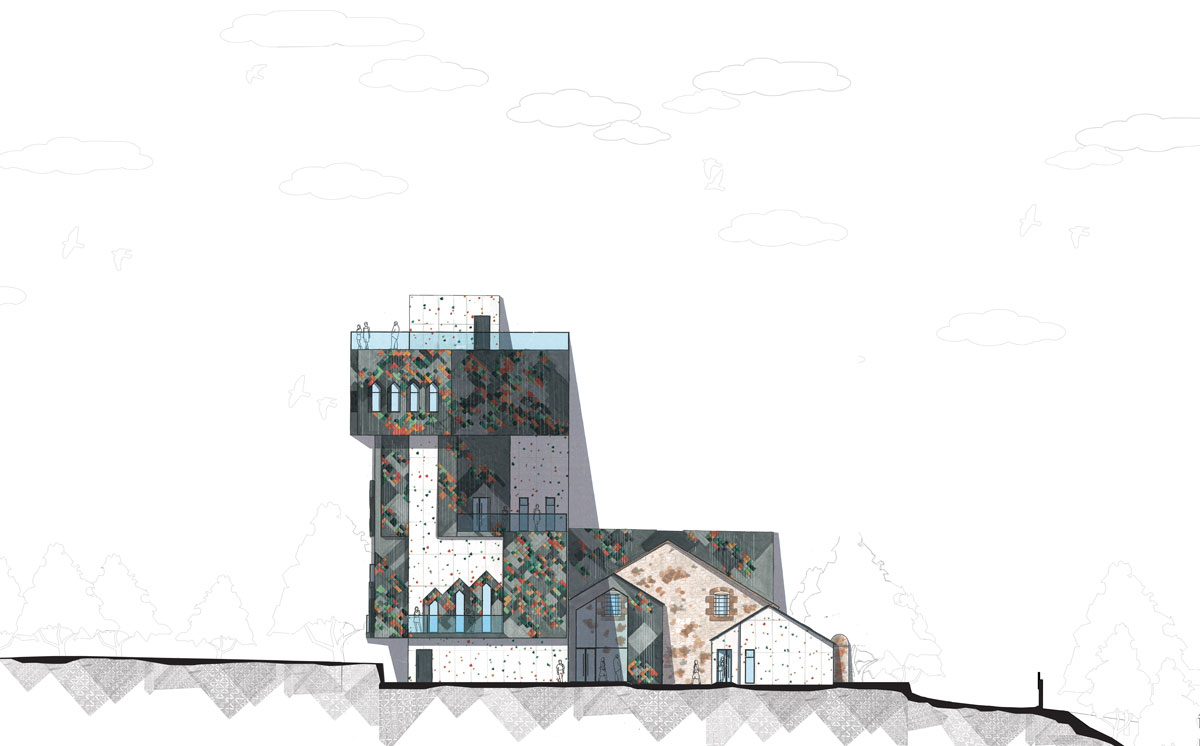
In contrast, the restaurant on the top floor provides a formal dining experience targeted towards visitors and tourists, offering a unique opportunity specific to the intervention – a viewpoint of Barcelona’s skyline, including tourist hotspot Sagrada Familia.
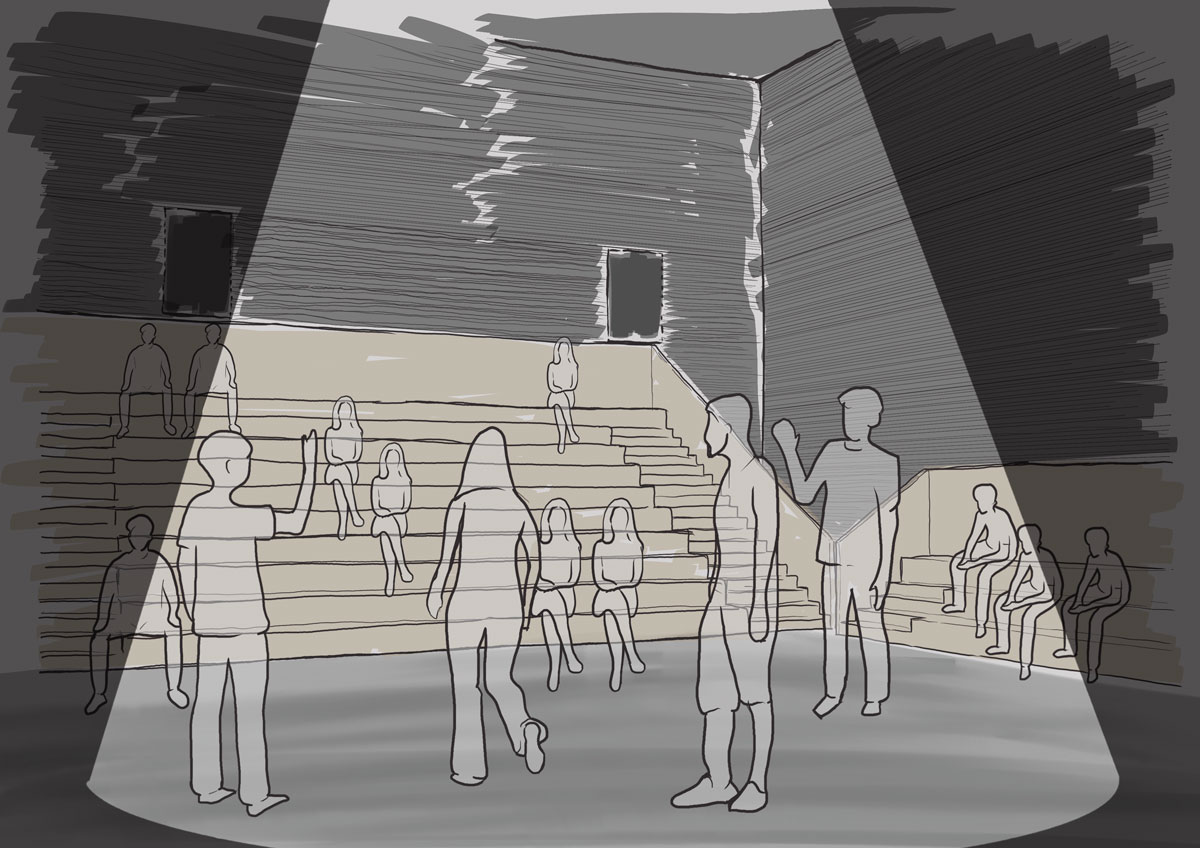
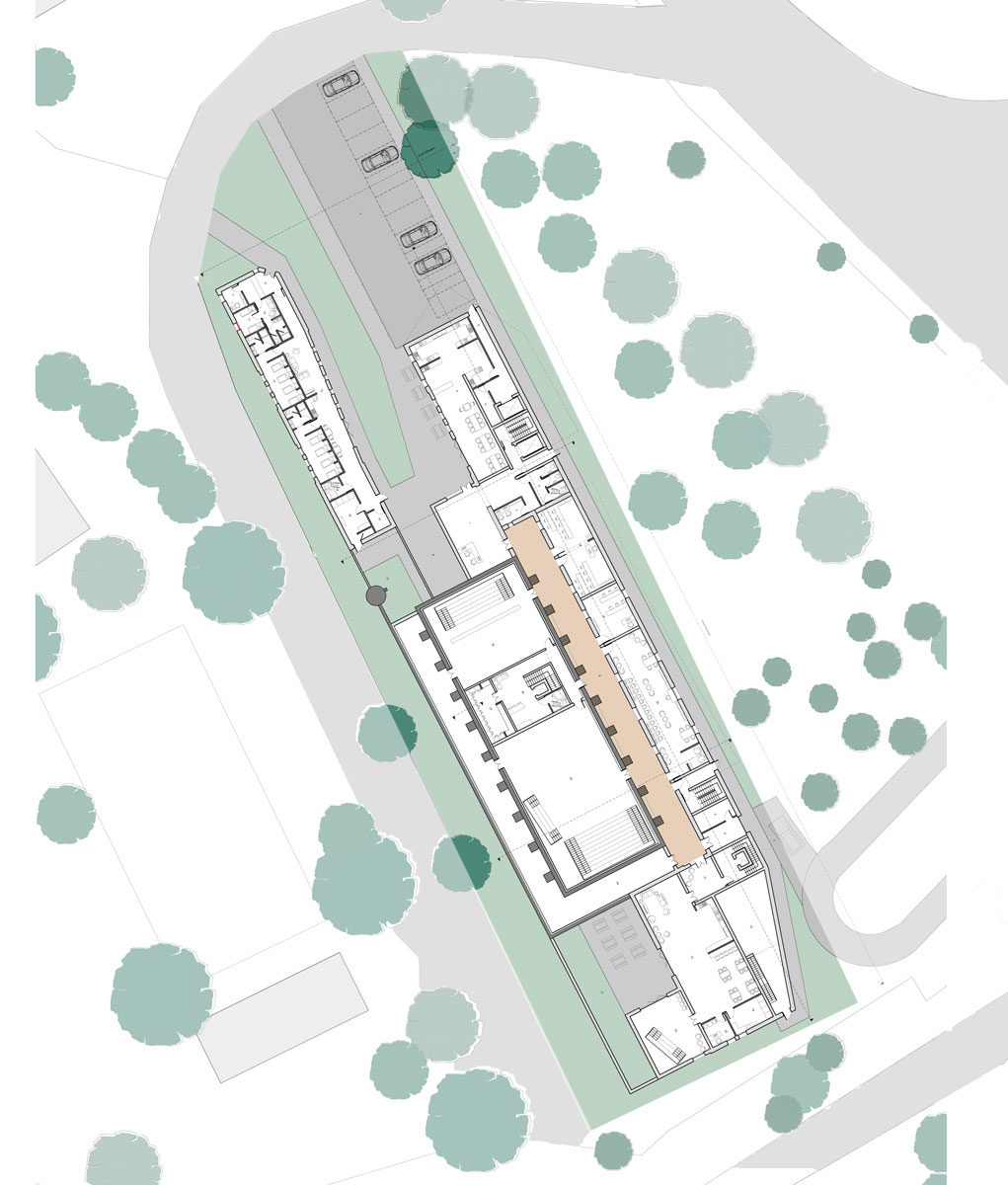
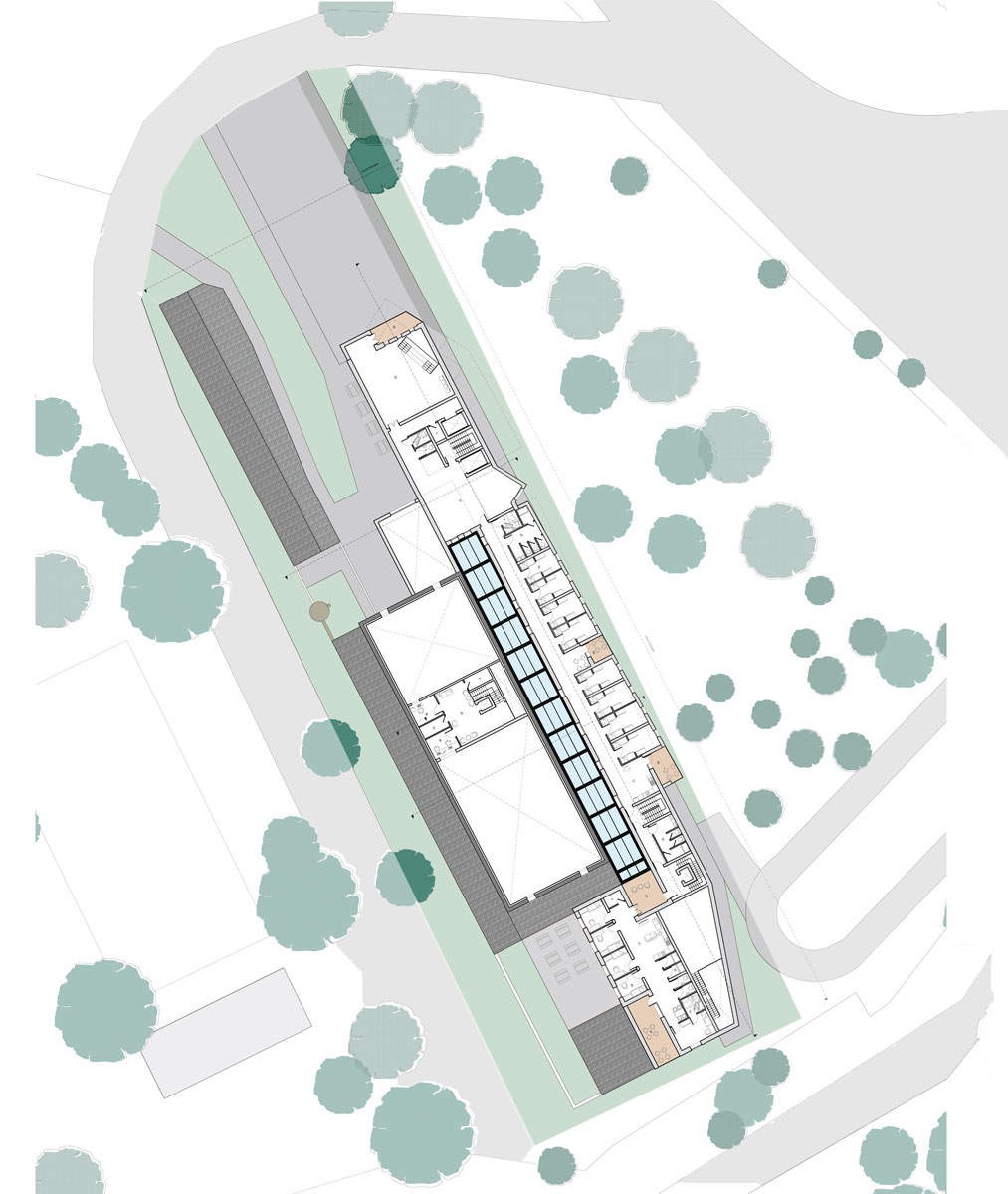
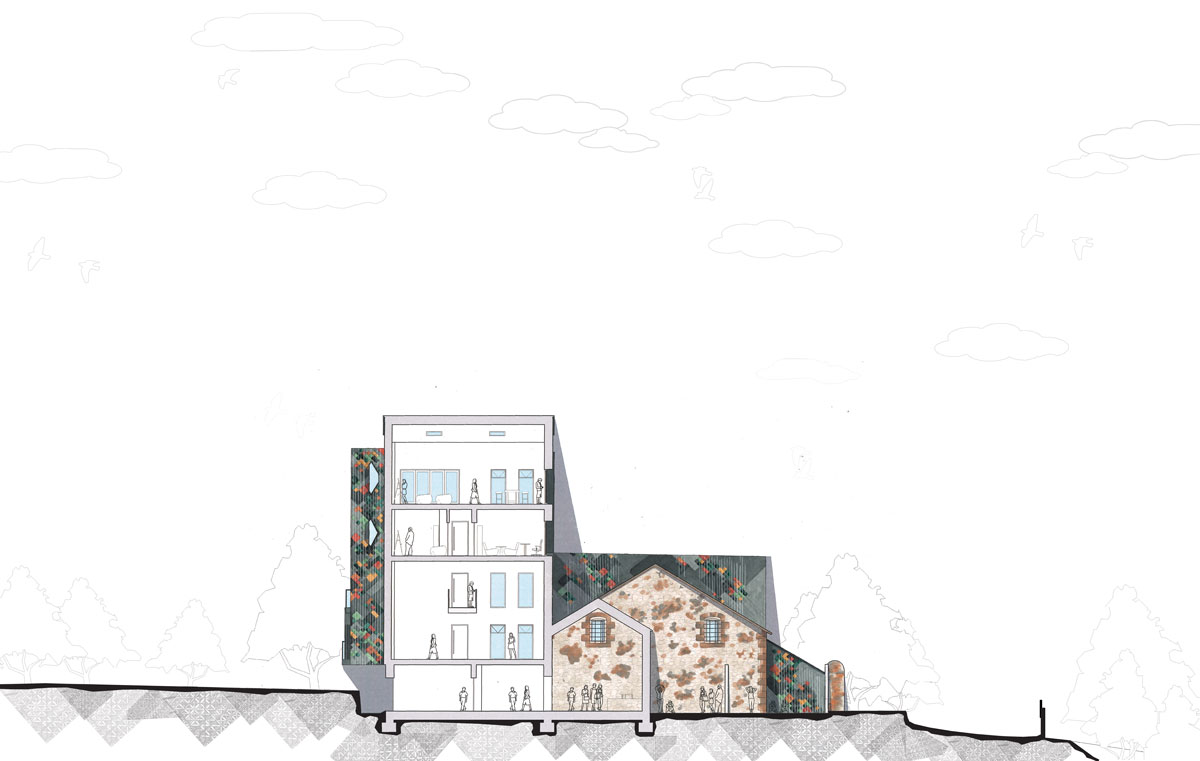
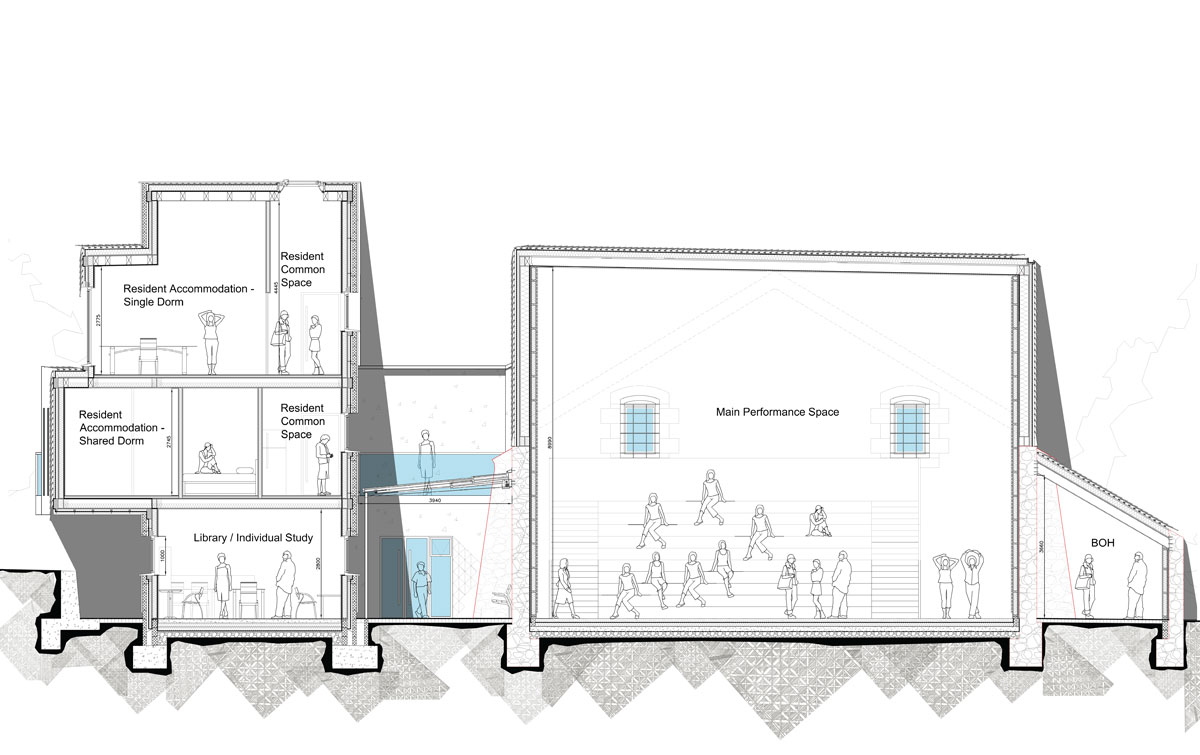
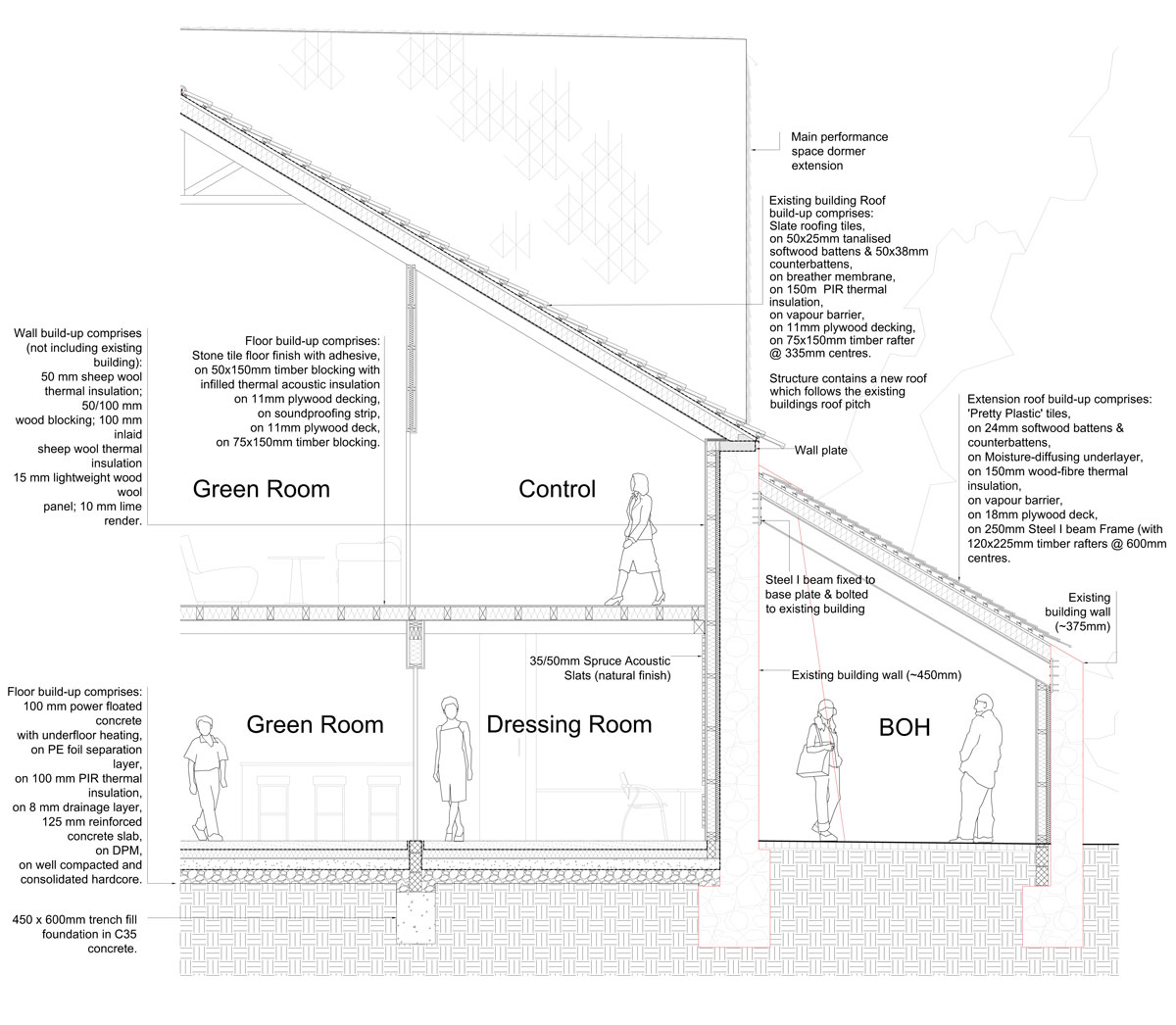
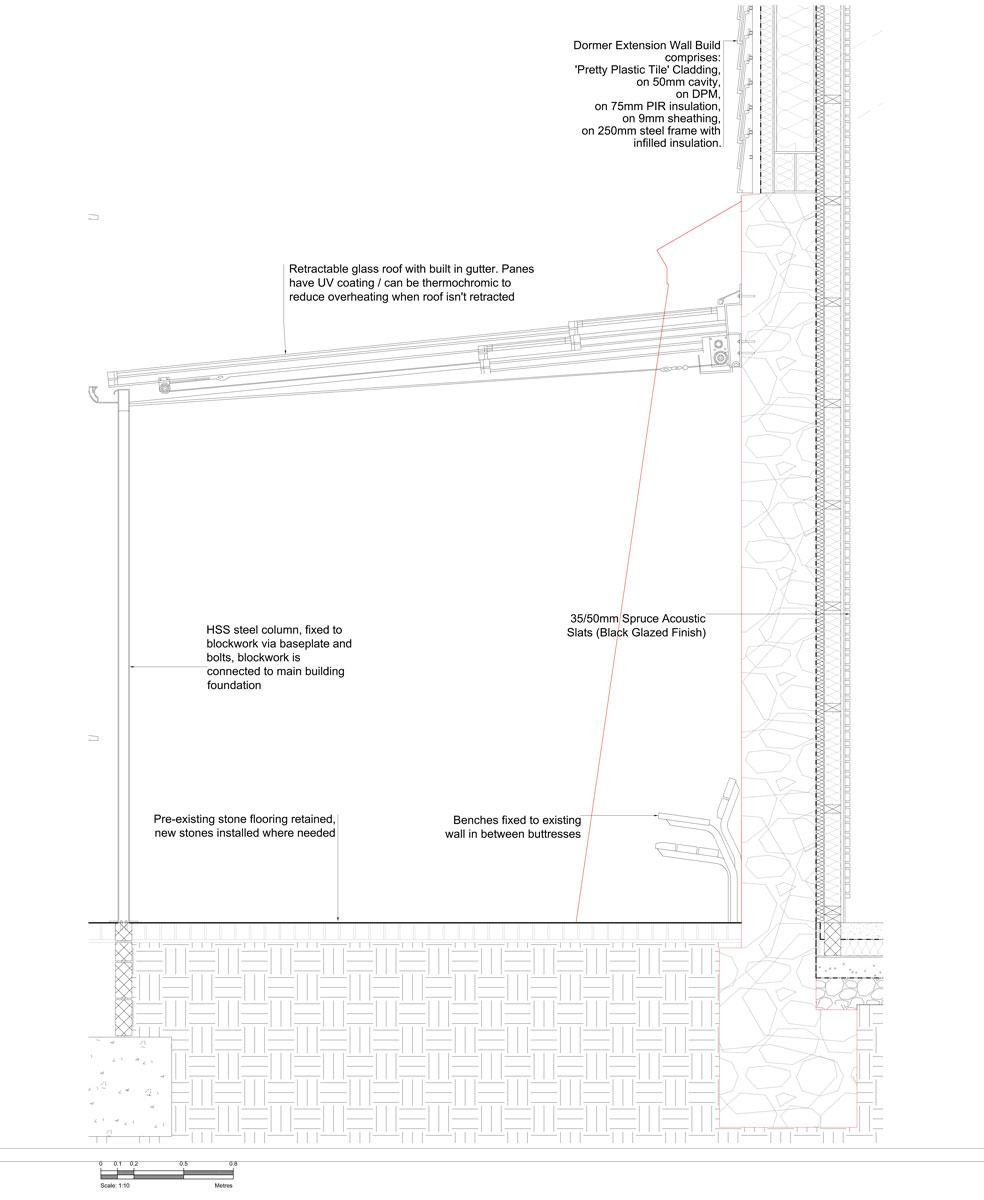
Interior Visual: Main Performance Space – The existing structure on site has been refurbished to fit a new BOH space as well as 2 flexible black-box style theatres which are both fitted with non fixed platform seating. The existing windows are retained and are covered with blackout blinds and the walls are fitted with extra thermal and acoustic insulation with a finish of black glazed timber slats to enhance acoustic performance of the spaces.
The main space is larger and has the existing building be extended with a dormer to allow for high ceiling heights for technical and lighting equipment. The larger floor area also allows for more elaborate shows such as dancing and acting, while the secondary performance space allows more intimate shows such as poetry readings.
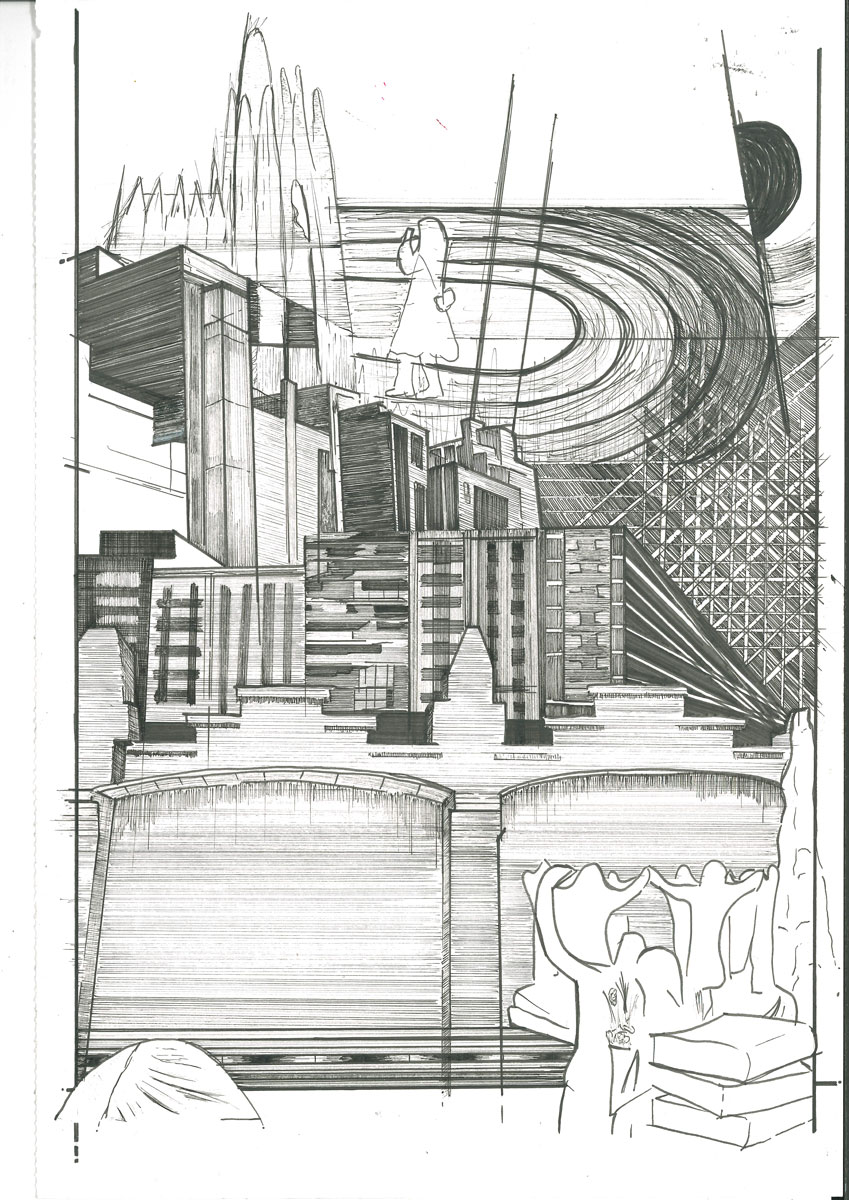
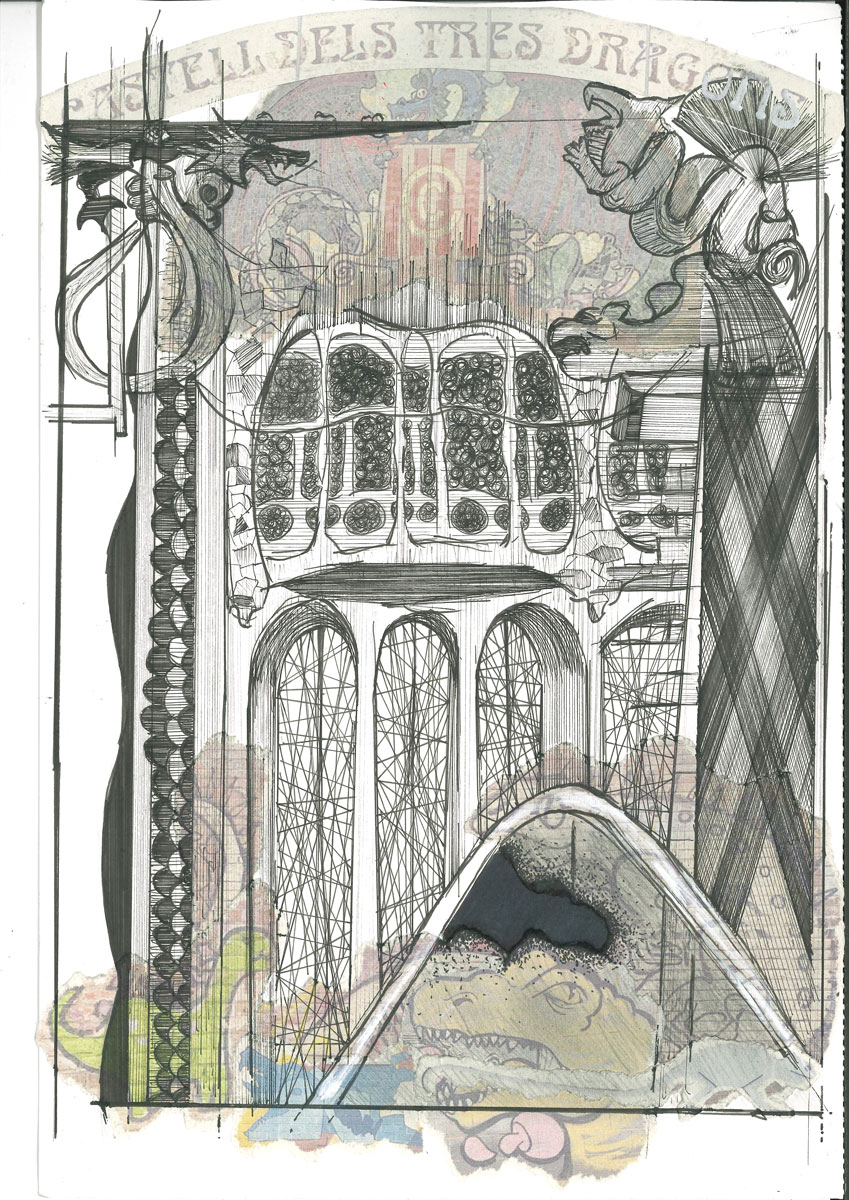
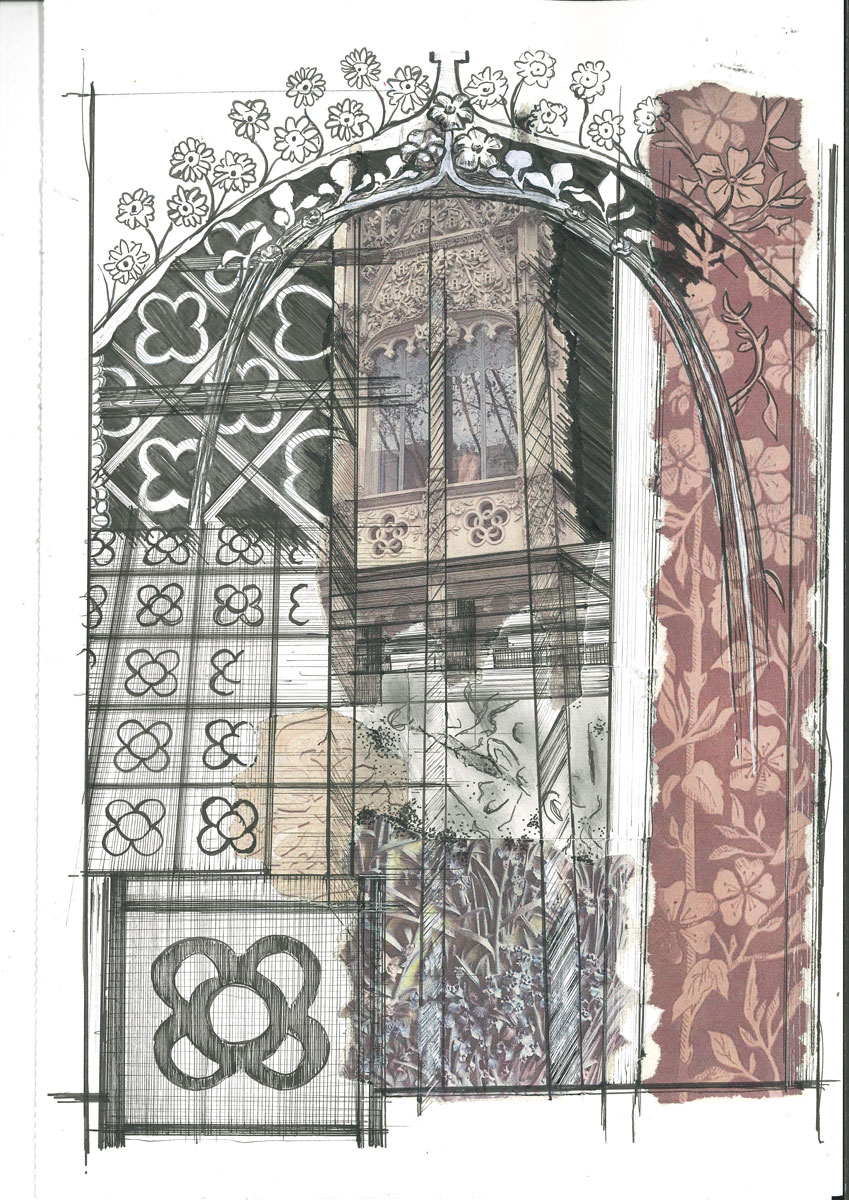
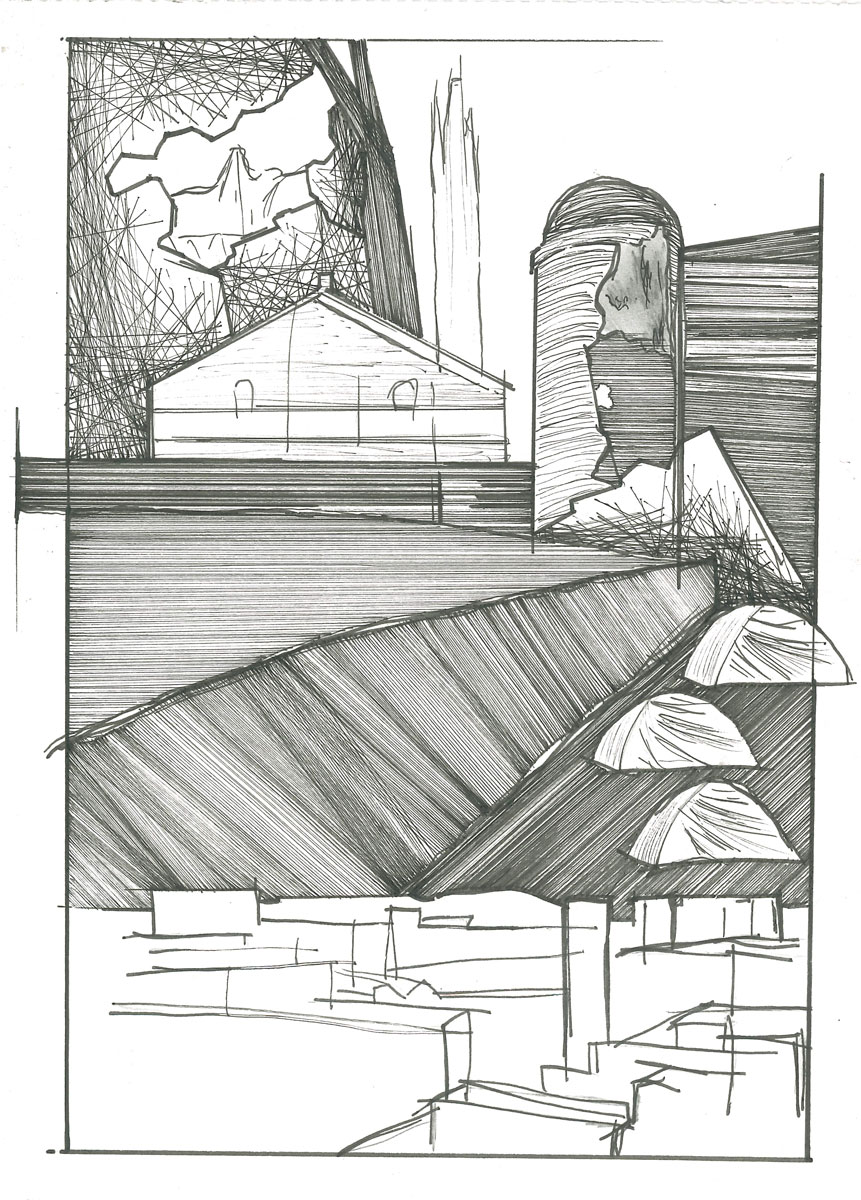
Site & City Interpretation – Psycho-Geographic Collages
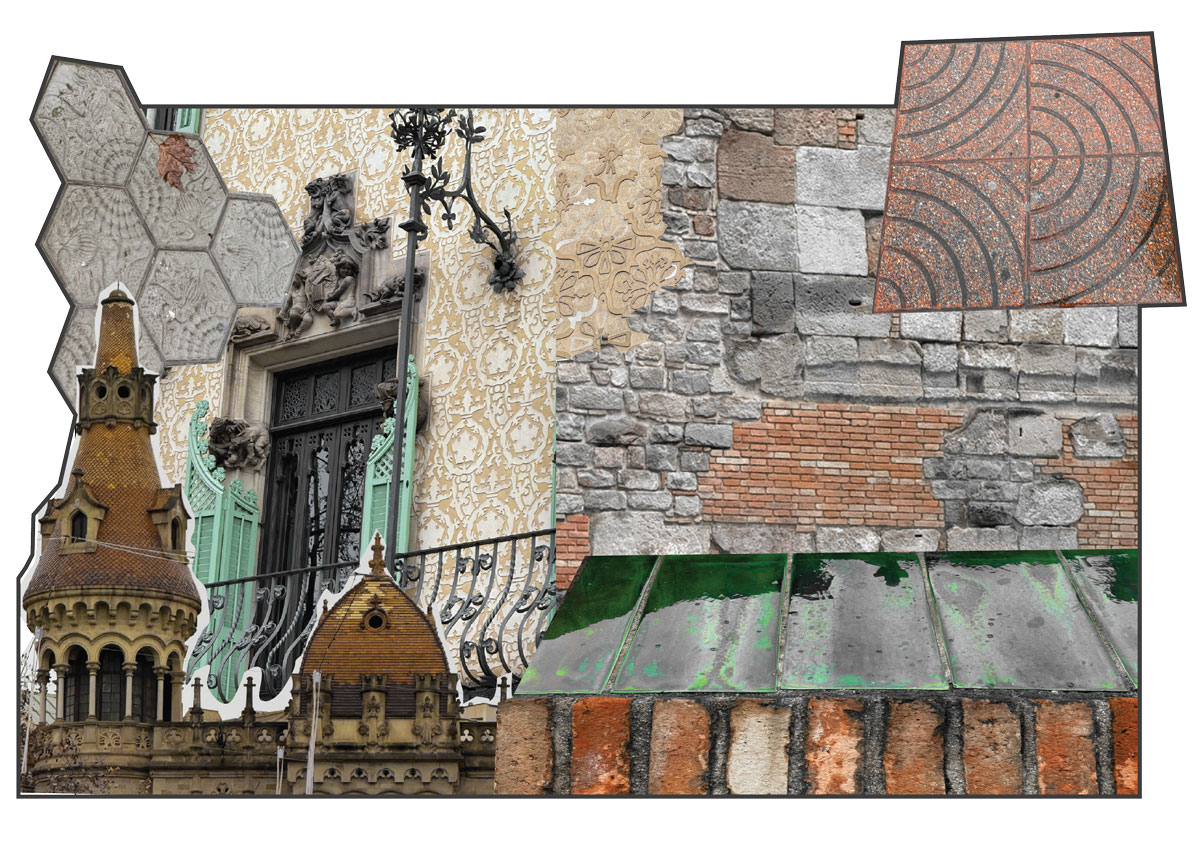
Psycho-geography was used to map observations found on the site visit. This was split into 3 different collages, each representing different forms and shapes found in Barcelona, which together form the city’s identity.
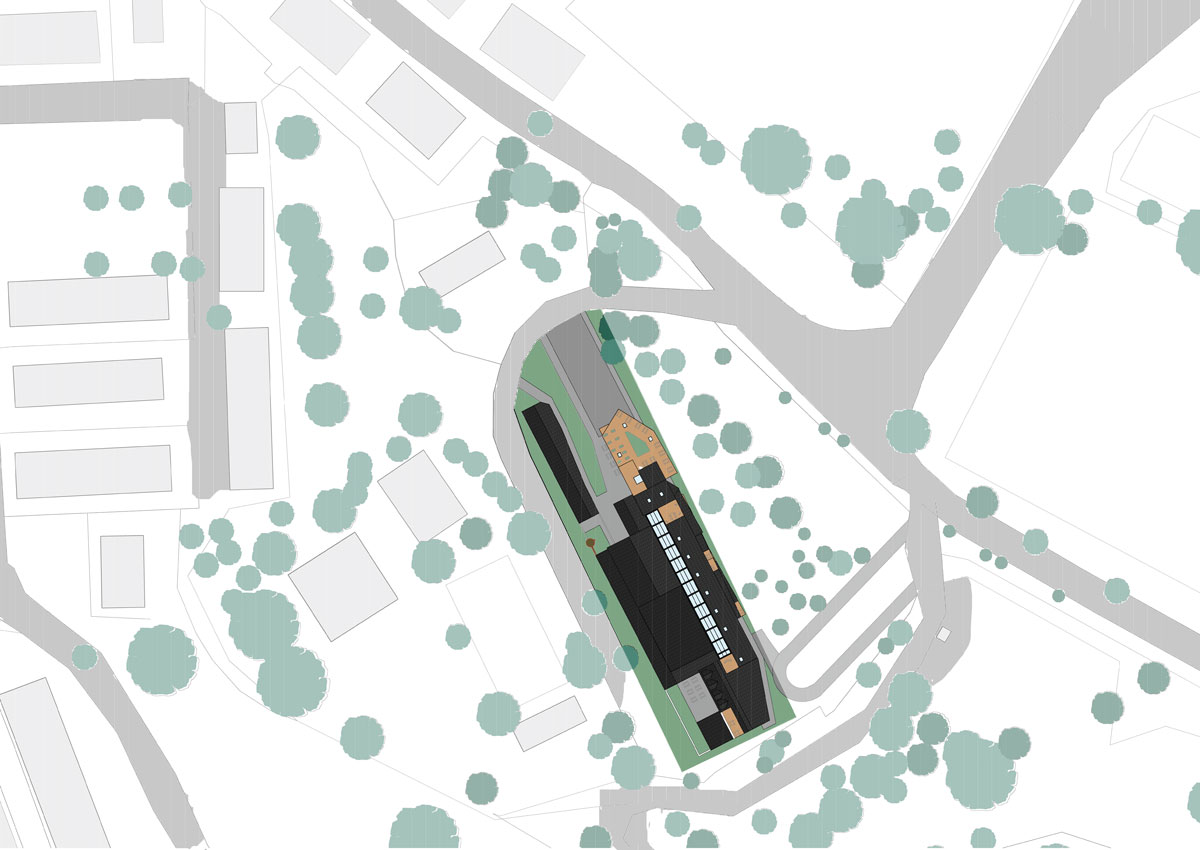
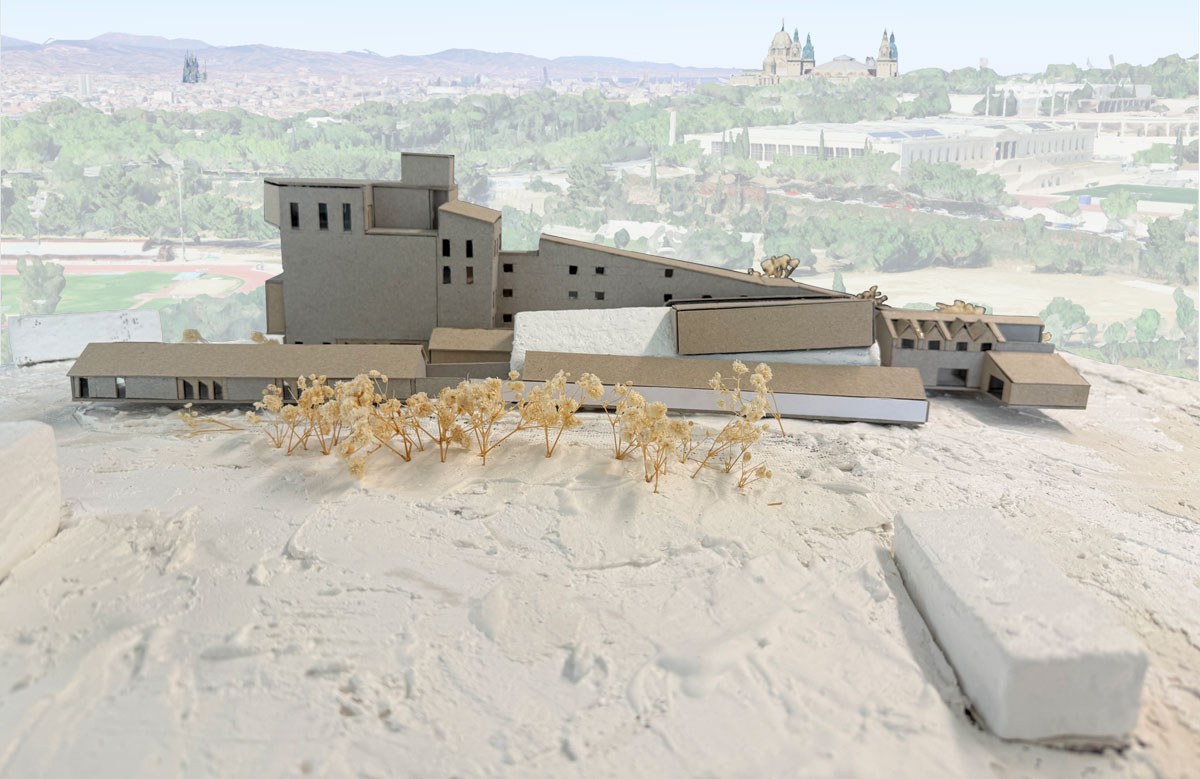
The chosen site location for El Dragón De Barcelona is Mount Montjuïc. This was chosen due to its strong link to the problems which the modern dragon (tourism) was a catalyst towards – the homelessness crisis. It’s a prominent area in Sants Montjuïc where rough sleepers in the area gather & due to it being further out from the main city, the area has a lack of support for them, making it ideal for the design principle of support.
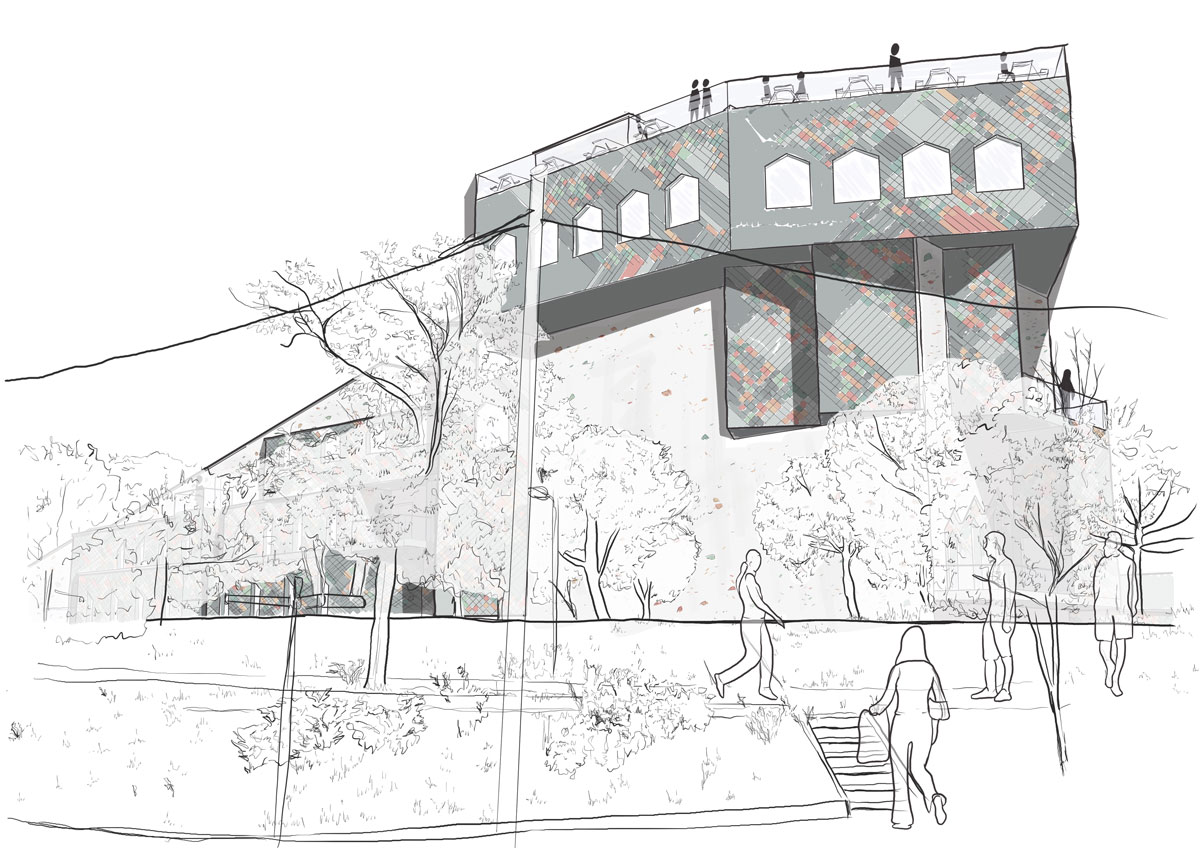
It also being a high point in the city also makes it a good match for the design principle of Landmark, as the interventions position can be used as a statement for giving awareness to everyday problems not as well known and creating a landmark for both locals (both needing or not needing support) and tourists who gain incentive to visit due to the possibility of gaining views to key cultural locations (such as Palau Nacional and Sagrada Família).
Finally, the sites existing building allows for visual contrast with new extensions added on, which links to the principle of duality as well as the concept of the Dragon, which in itself is a creature of contrast in symbolism.
Barcelona – City of Duality
Barcelona – City of Dragons
Barcelona – City of Flowers
Chosen Site Interpretation – Mount Montjuïc – La Marina de Port
Design Principles
The key programmatic principle is ‘Performance as a Tool for Education, Recovery & Awareness’. The principle aims to address underlying problems that people living on the streets of Barcelona face – namely, mental vulnerability and education level.
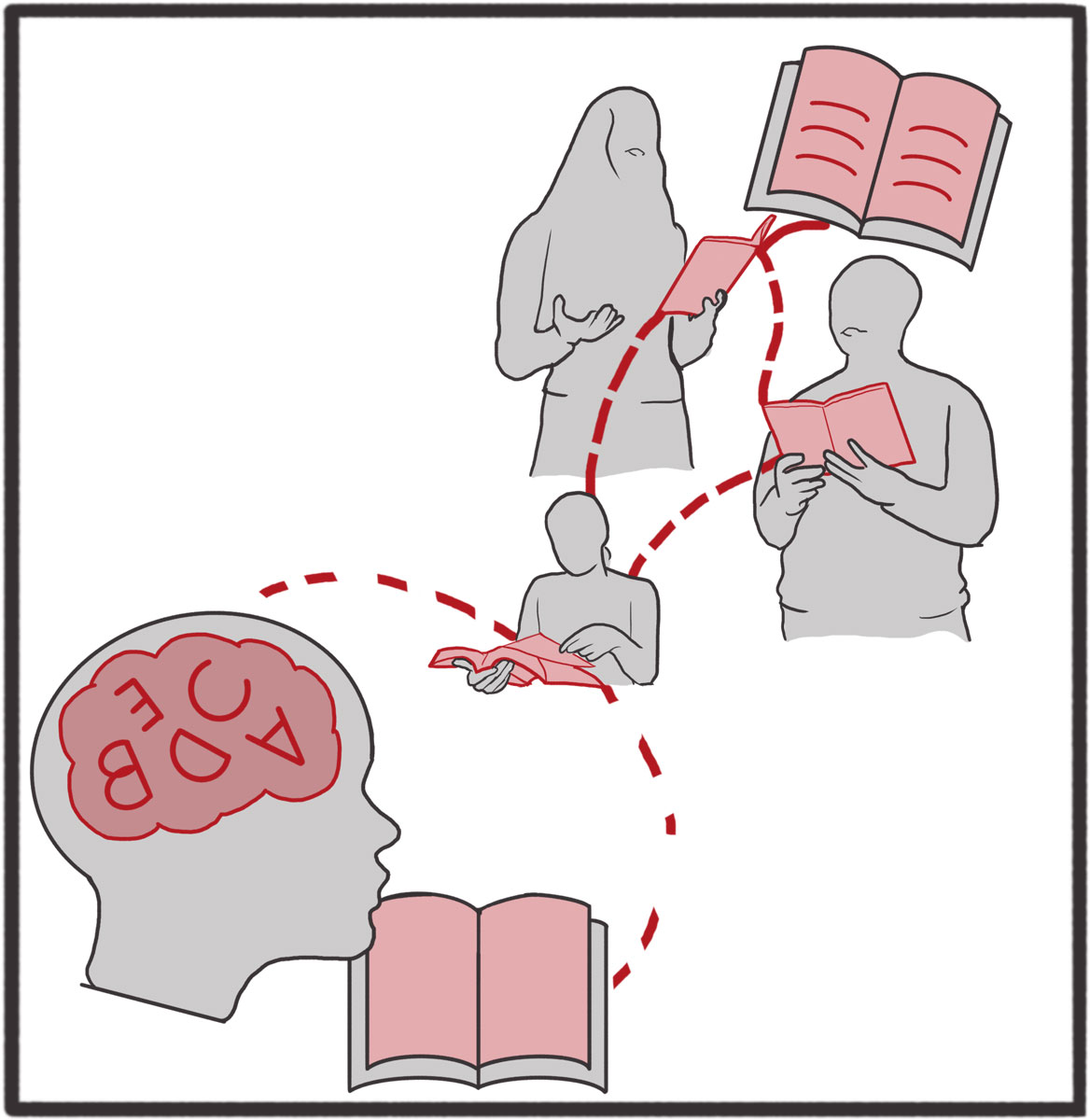
The intervention uses performance as a tool for empowerment for residents staying in the temporary accommodation, as well as other users of the facilities (such as people with learning differences), as well as a tool to teach reading and writing to adults, as ~20% of people living on the streets in Barcelona don’t know how to read or write.
This is done using drama therapy as a tool to teach literacy through acting, reading lines and writing personalised poetry based on the users’ past experiences and their future hopes. Reasoning for this experimental choice of teaching language and literacy skills for adults is due to the research findings, which found that traditional methods felt discouraging and didn’t feel relevant to real-world use. Meanwhile, this method allows them to explore and discuss interests and topics which are relevant to their futures once they leave the centre. Research findings also found this method helps users process trauma, improve fluency and language skills through repeated practice of reading lines and in doing so, increase self-esteem.
Performances and pieces of literature made throughout this process are then performed to the general public to spread awareness of societal problems and individual experiences that people with learning differences have.
Material & Form Strategy – Representing & Celebrating The Dragon
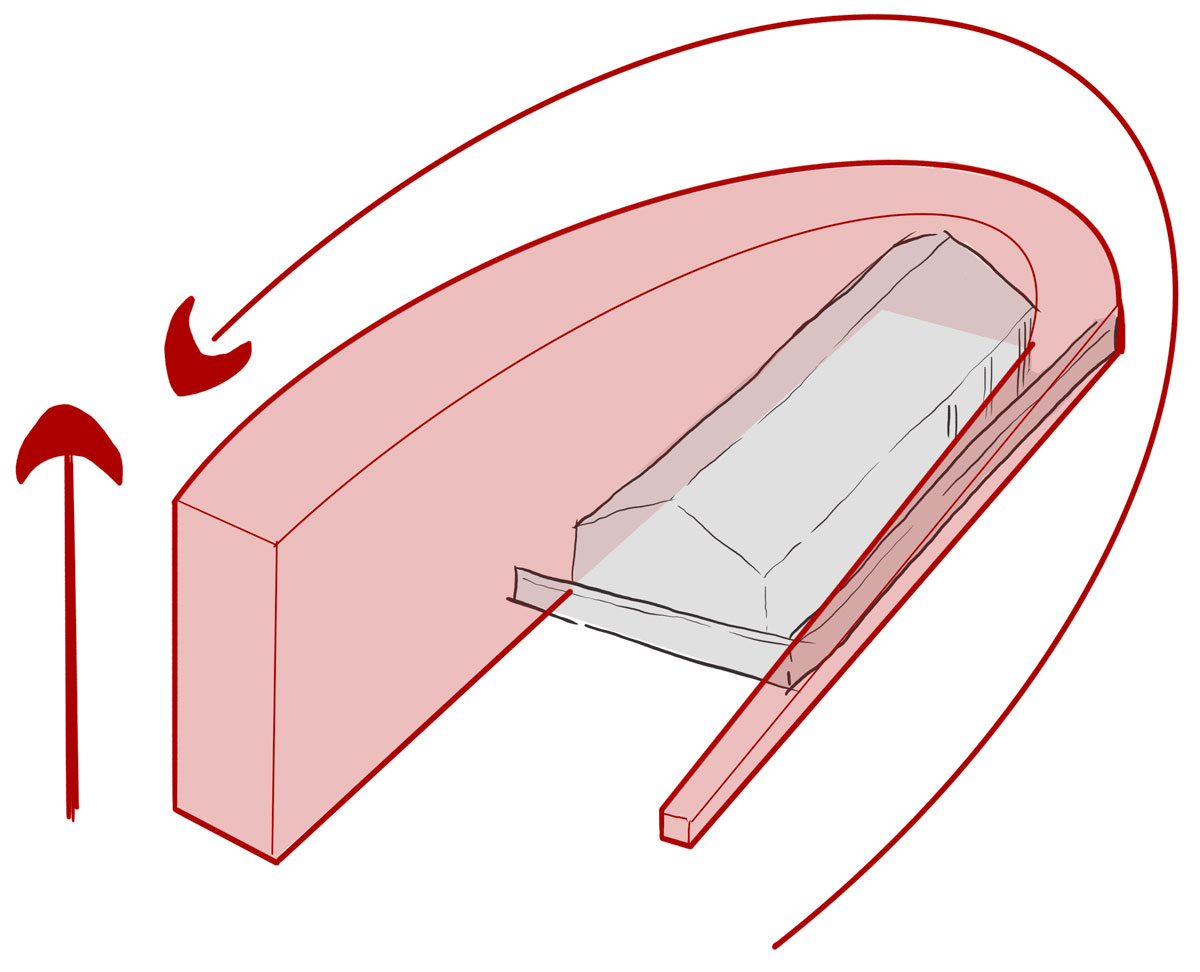
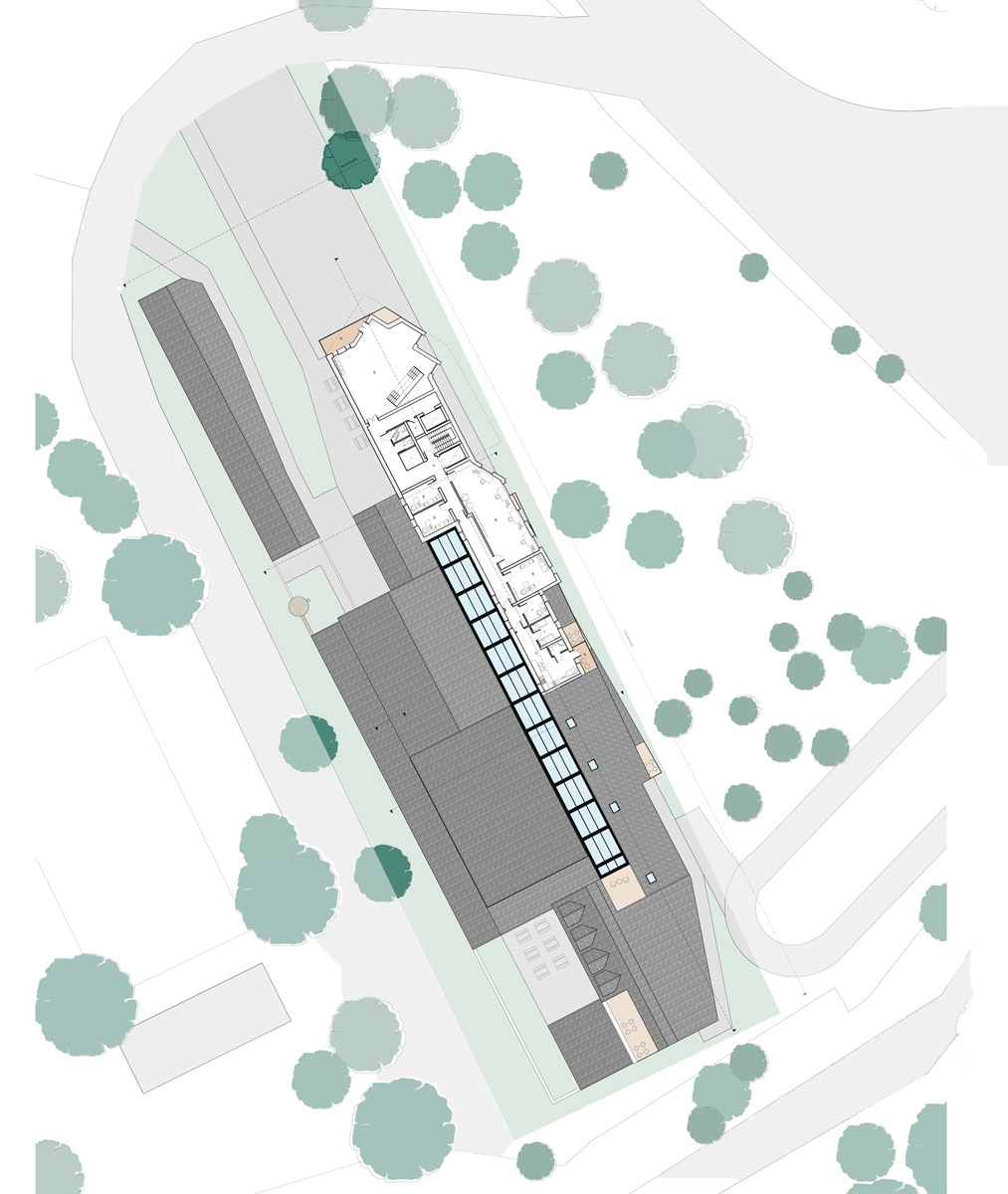
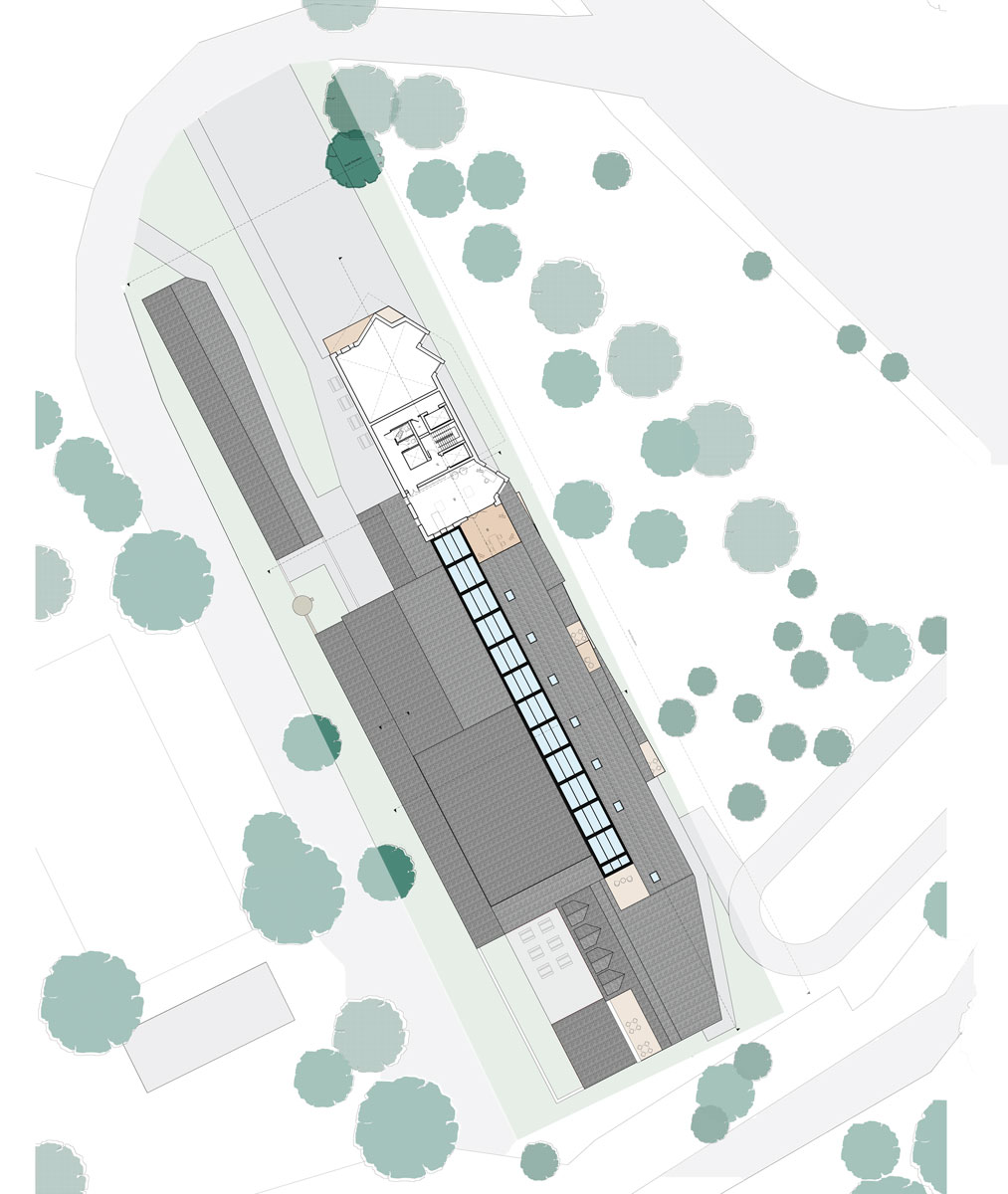
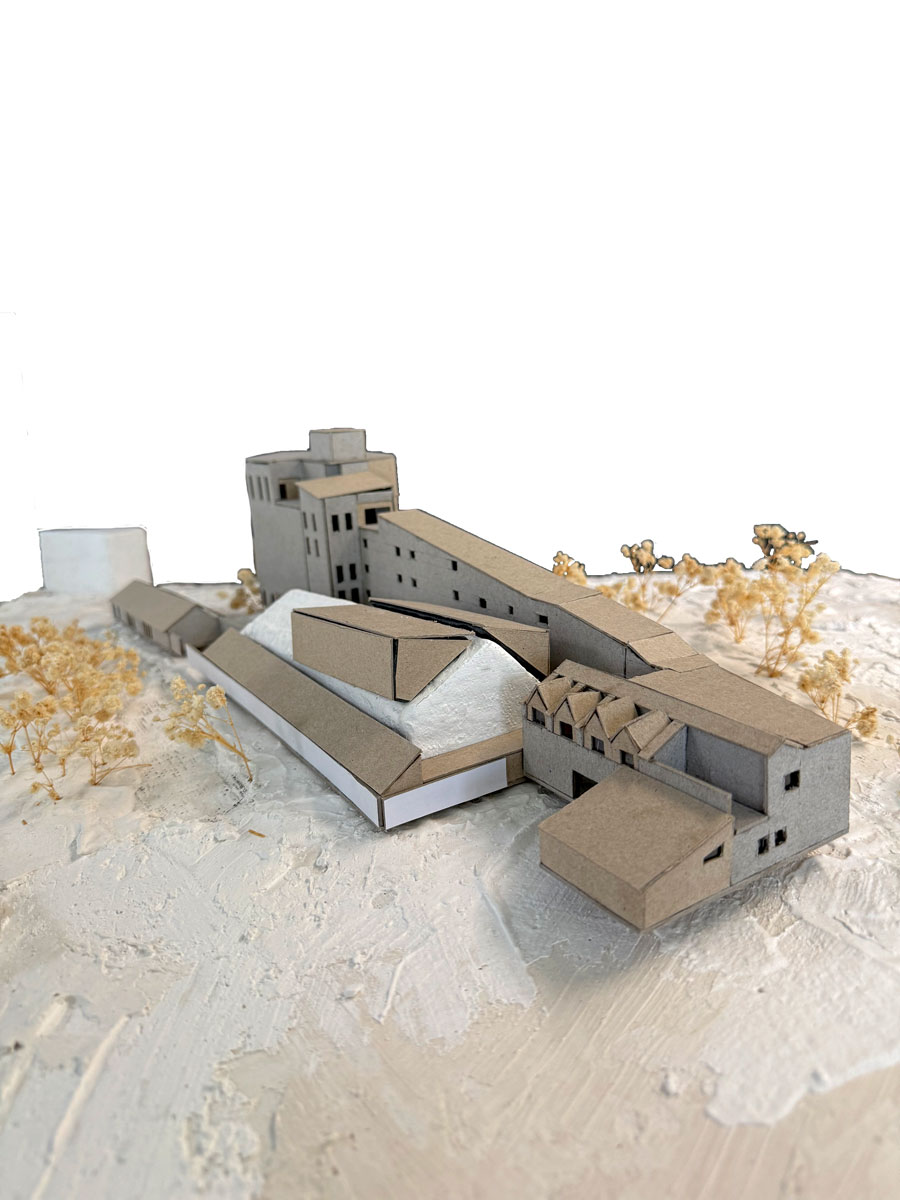
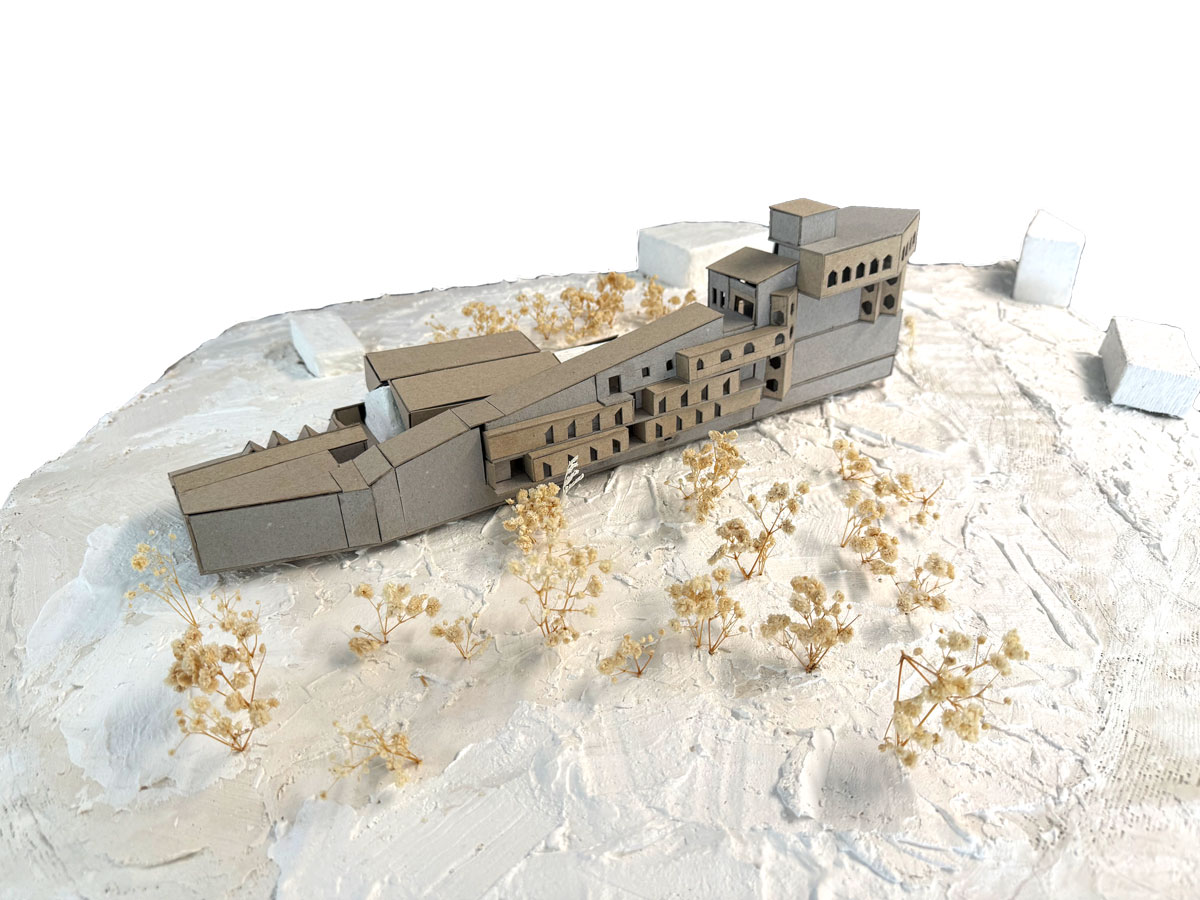
Form Strategy – Sweeping form which mirrors a dragon wrapping around the existing building, sheltering and protecting heritage – similar to how the programme shelters locals and is protecting social heritage by bringing awareness to problems risen from tourism. Form mirrors original shape from concept model and utilises extension and encapsulating site strategies without loosing the existing building and its key elevations (south)
Final Massing Iteration, Implementing Form Strategy
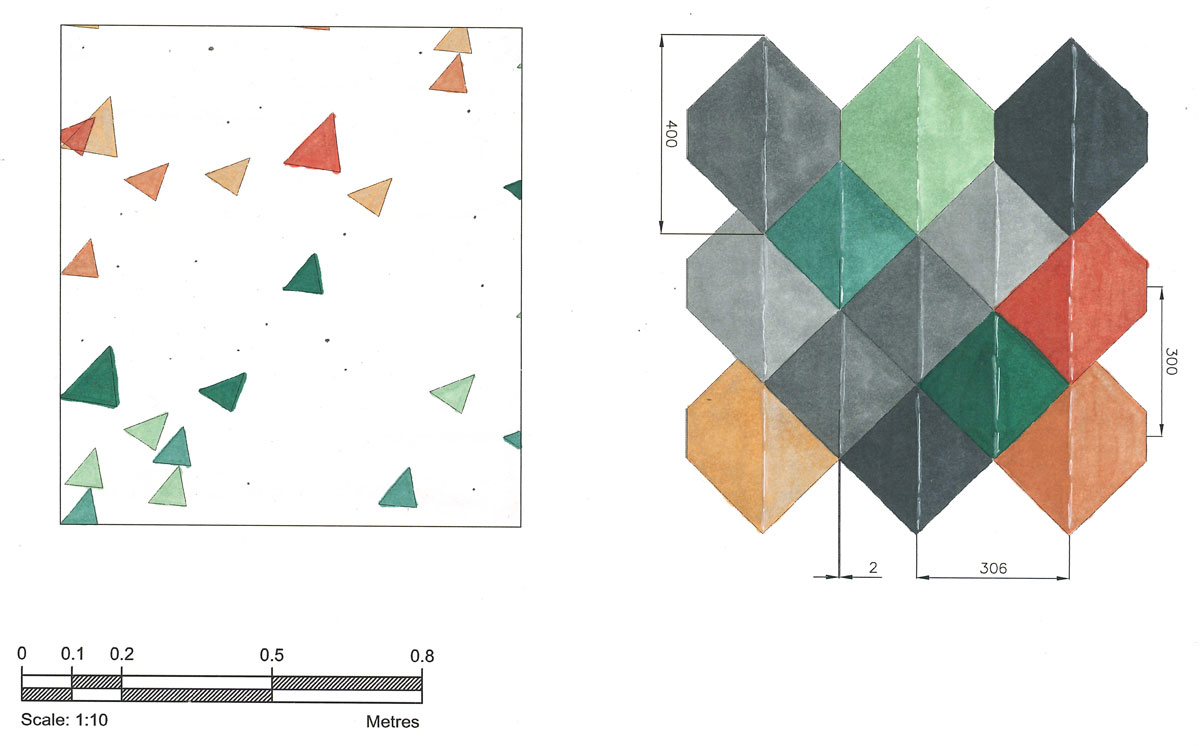
The Colours of Barcelona Collage – Extracting Key Colours Found In Site Visit
Final material choice features precast Terrazzo Tiles paired with ‘Pretty Plastic’ tiles, which are made from locally recycled PVC from construction waste.
Both materials feature colours extracted from Colours of Barcelona material collage, and the shape of the plastic tiles recalls the Dragon – the creature of duality and the key concept driver. Choice also reinforces the design principle of duality, which is also inspired by the Dragon, by having a strong visual contrast to the existing building on site.