Over the course of the BArch at Loughborough I have been interested in the role of architecture as a facilitator, a catalyst for positive impact within its context. This project focuses on the undiscovered synergies of site and people.
The Walled City of Nicosia has stood divided for four decades. The North, occupied by Turkey since 1974, relies on the mainland state for necessities such as potable water. The Greek Cypriot South reaps the benefits of being a member of the European Union. Divided by the United Nations ‘Green Zone’ since 1963, the border hosts a crossing checkpoint where flow of people is allowed only with the appropriate documentation. The physical border may come down, but the disconnect between the residents of the North and the South will require more than just removal of tangible boundaries. Deep emotional damage and generational trauma runs deeper than the walls which separate the island. Post-conflict relations are tense, with no guaranteed plan for successful resolution.
Conflict resolution techniques for disputes between parties follow a number of steps. The first of which involve meaningful, empathetic, and genuine communication between the two. Only by understanding each other can the conflict be addressed and solutions discussed. Techniques call for third party involvement for objective views and ideas. Post-conflict rebuilding can be a tool for healing, however community involvement is critical. Only once the conversations have taken place can there be a path to a clear win-win solution. Removal of the physical border is not enough to reconnect the North and South of Cyprus. Connection can’t be forced, it needs facilitating. Intentional communication and privacy to surrender, offering strangers a glimpse of self, aids in forming connection.


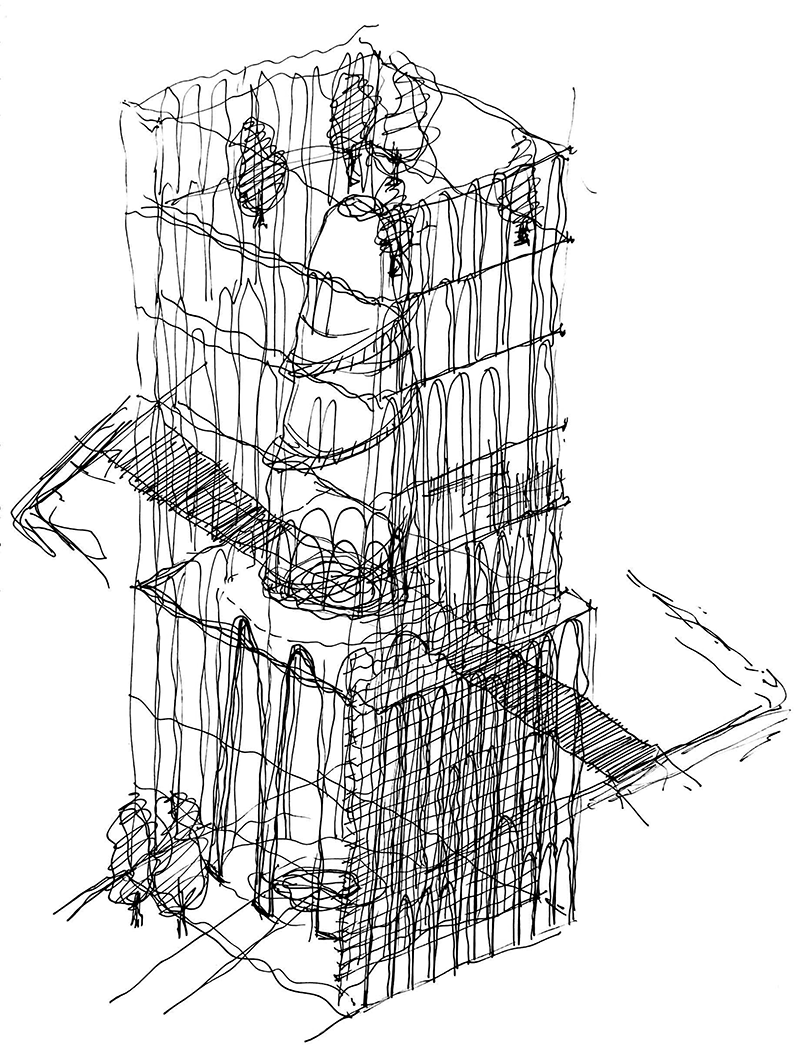
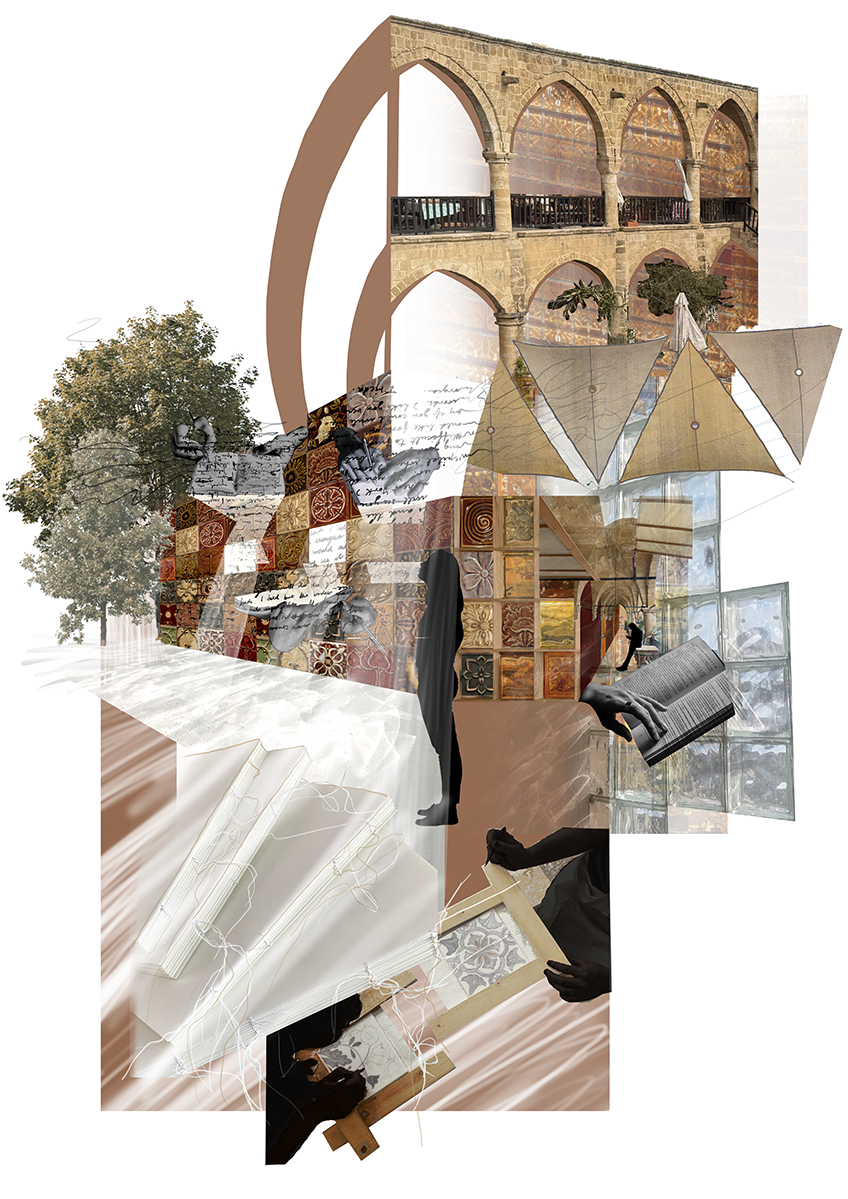
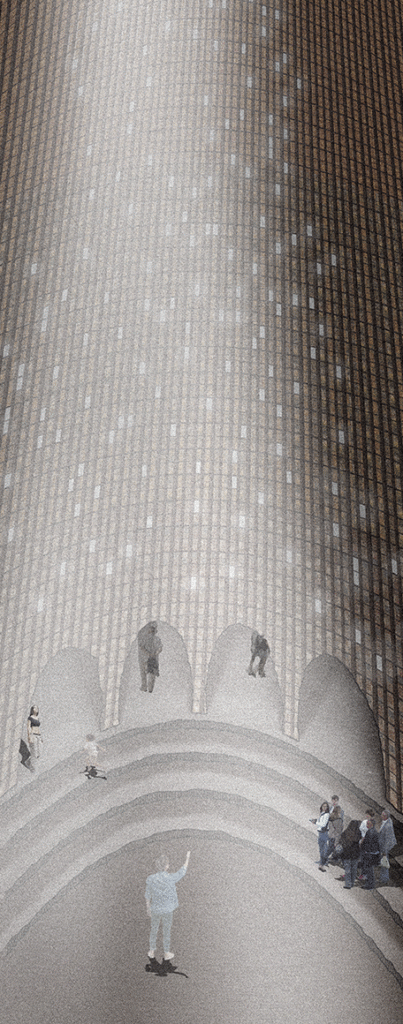
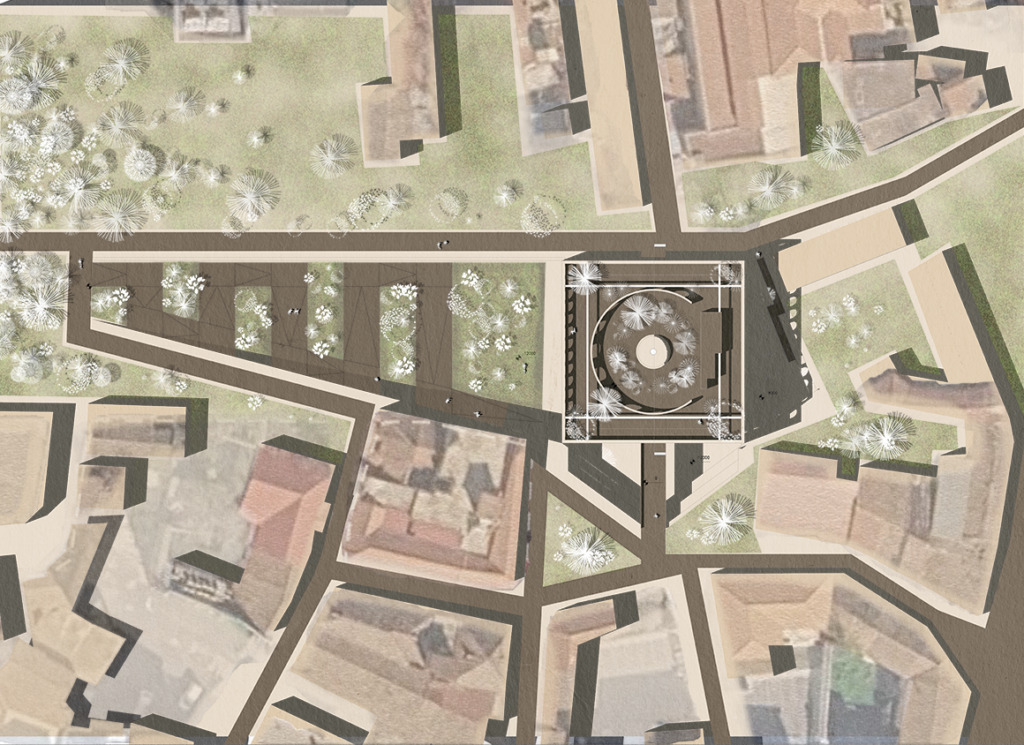
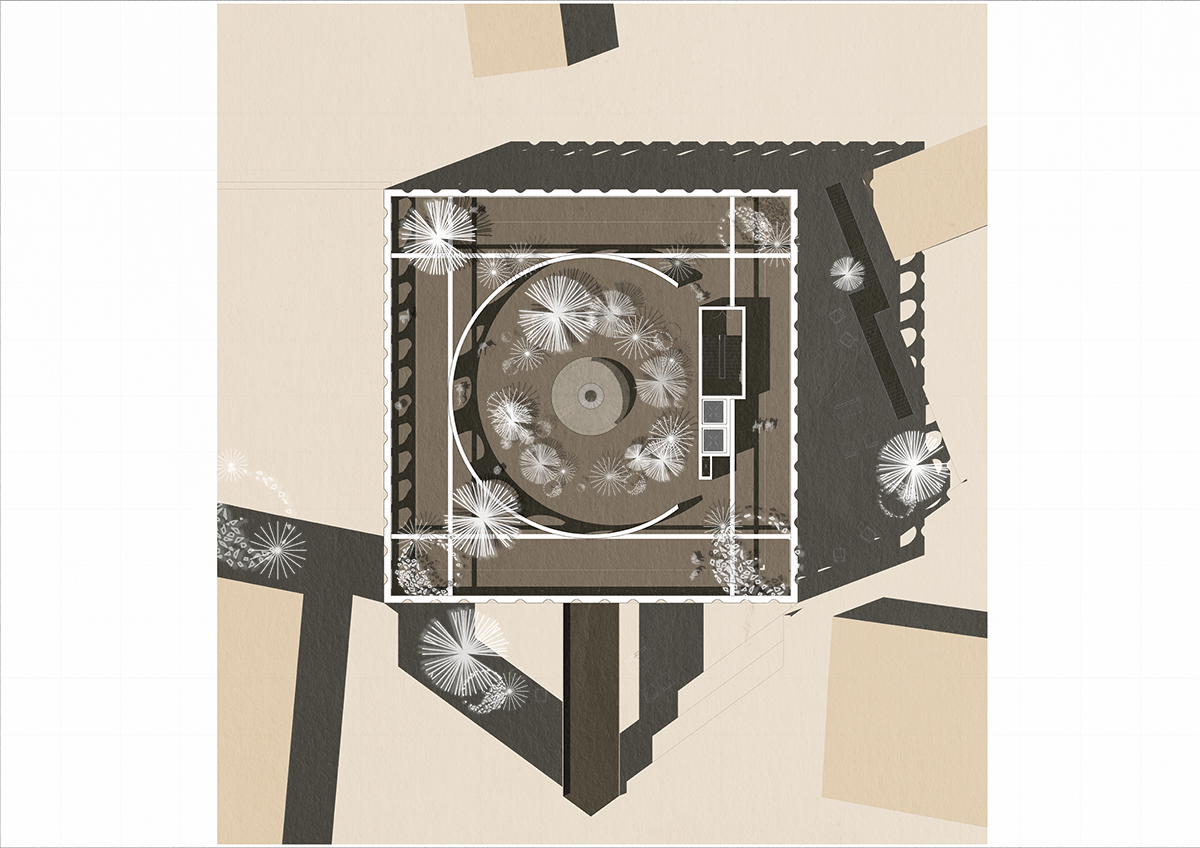
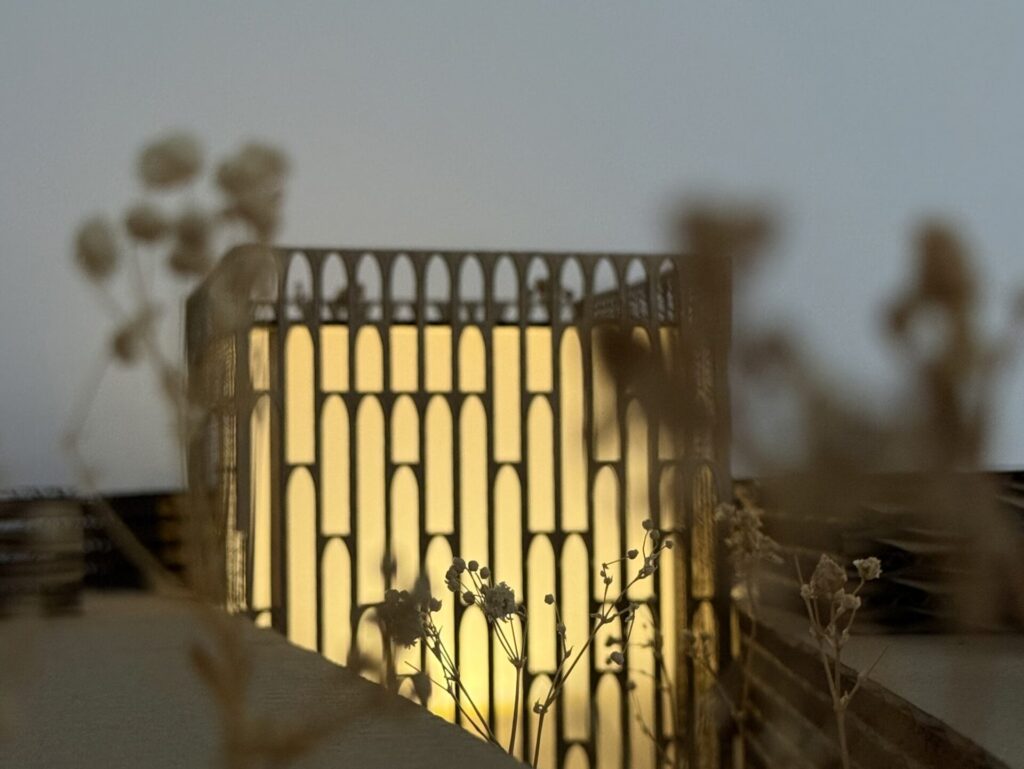
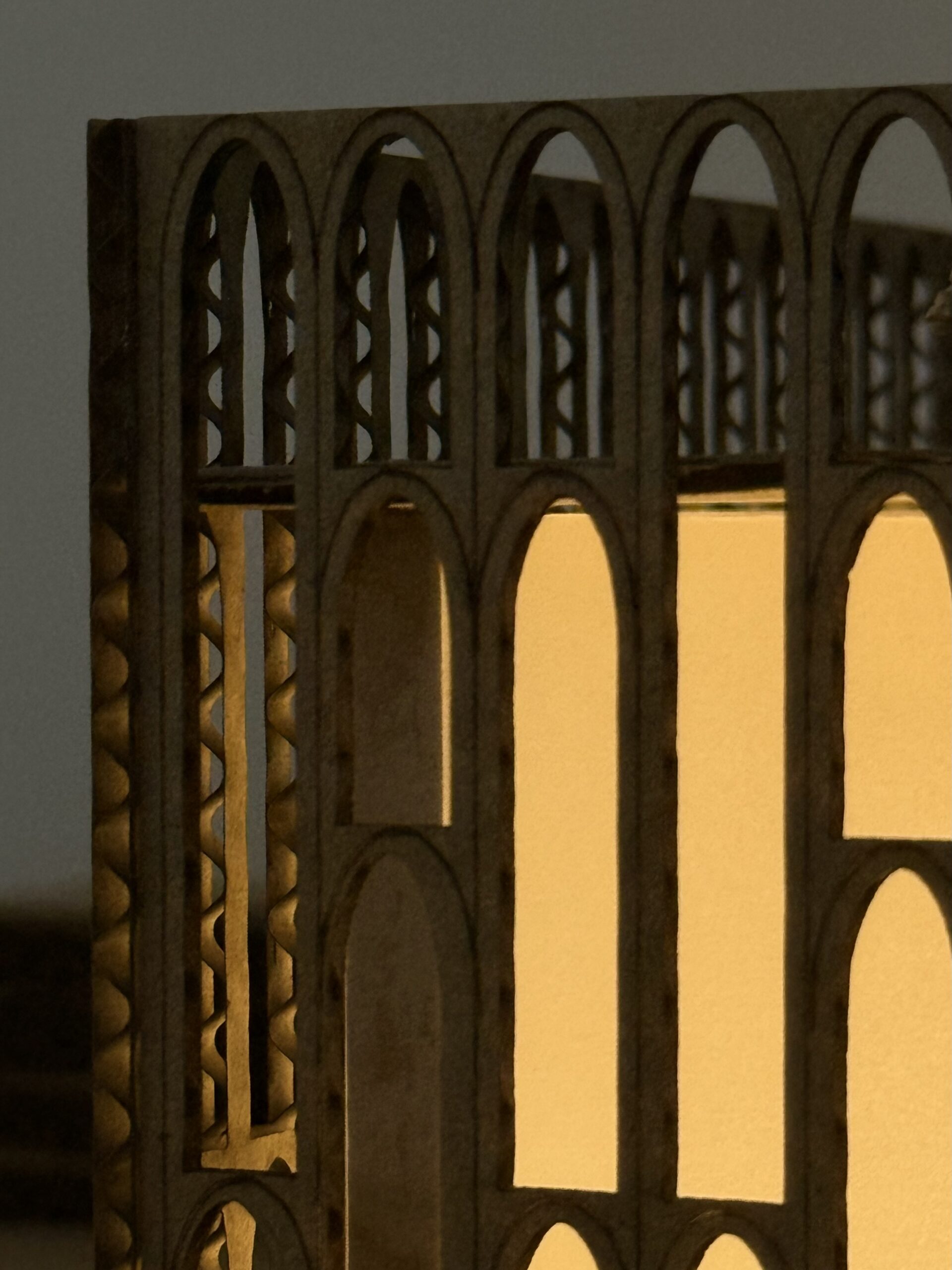
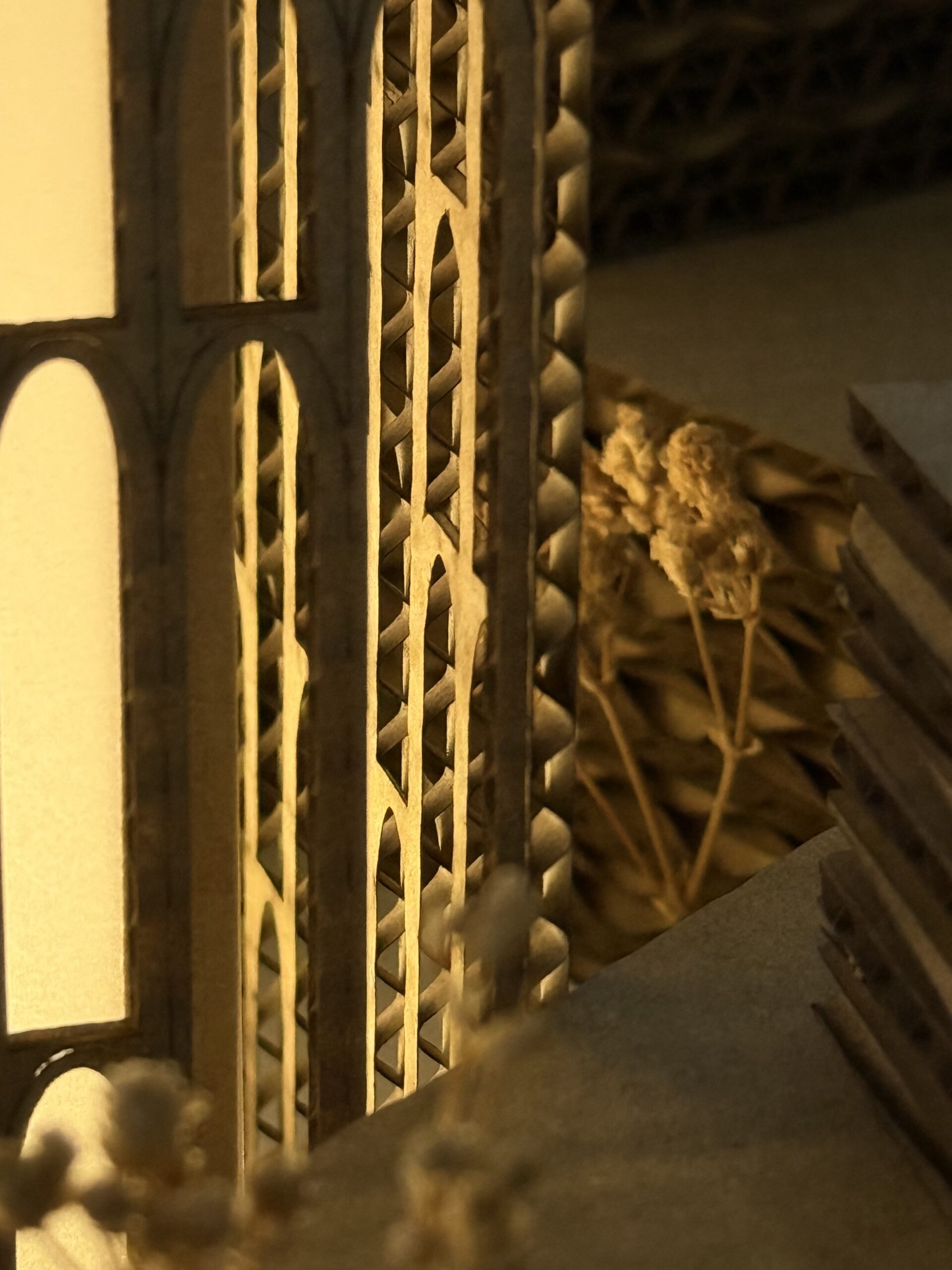
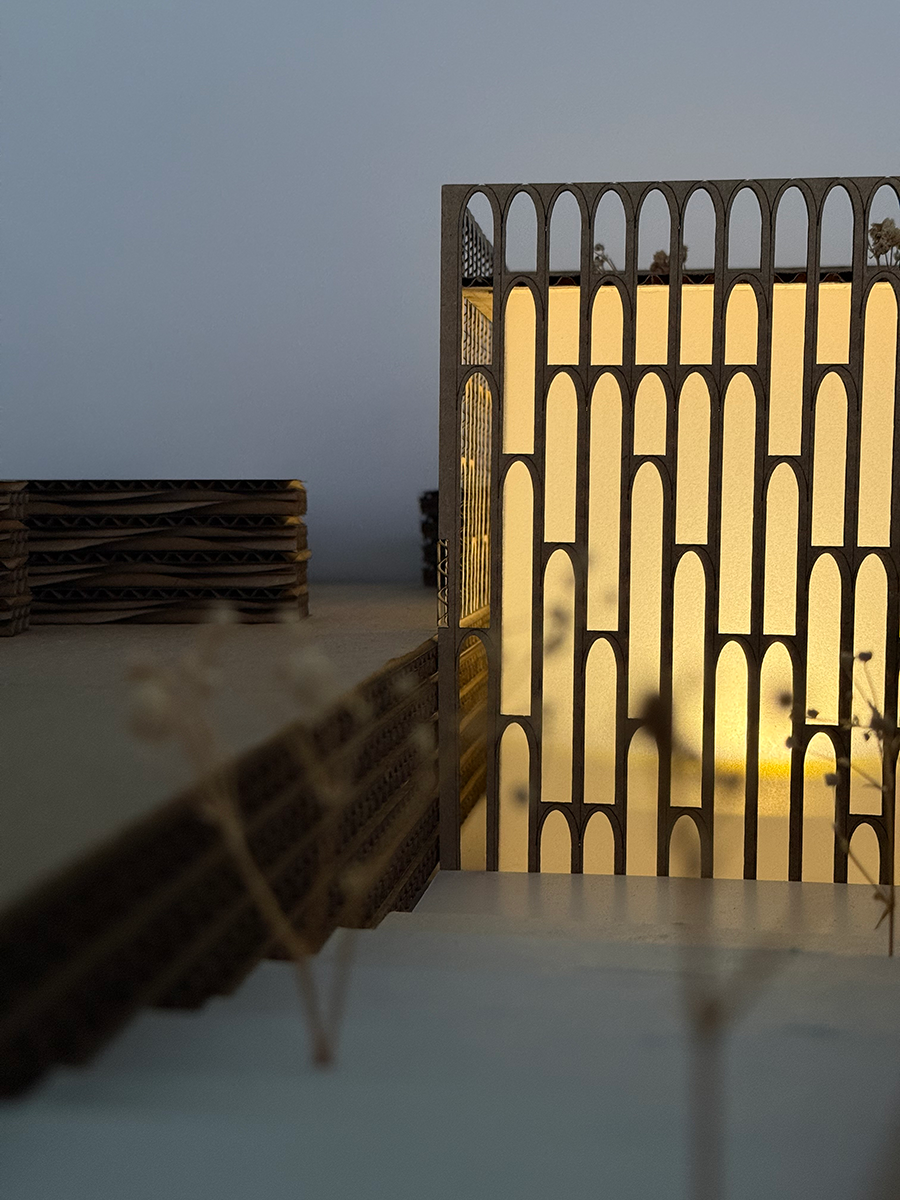
The Collective Memory sits in the heart of Nicosia’s Walled City, bridging the physical gap created by the UN Green Zone between the North and the South, and the intangible gap created by the decades of unresolved conflict. A place to release memories and let them live, recording social history over time. Private spaces accessible from the overgrown west side lead to a reflection pool and private writing spaces, along with ceramic and glass workshops which serve as the birth point of journals living in the memory vault above. Integrating the journals into the building fabric allows the building to become a physical manifestation of collective memory. Ascending vertically, the building becomes more public, serving as a bridge between the north and south on the ground level, where the memory vault gives breath to an area for public readings, interpretations, and performance based on memories submitted to the collection.
Identity of place is formed by collective memory and conscience, where individual memory exists within the social. Abandoned for over four decades, the UN Green Zone divides the North and South of Cyprus. The unused land, stripped of its identity and function within the city, remains inaccessible. Offering personal reflection and allowing understanding to form between the North and South sides while healing self through writing celebrates individual experiences and creates a living, collective memory. The past is recorded through individual memory and used as the method for conflict resolution. Exchange of anonymous writing can foster unexpected partnerships to form between strangers, nurturing community.